Best Places to Surf in the World: The Complete Guide
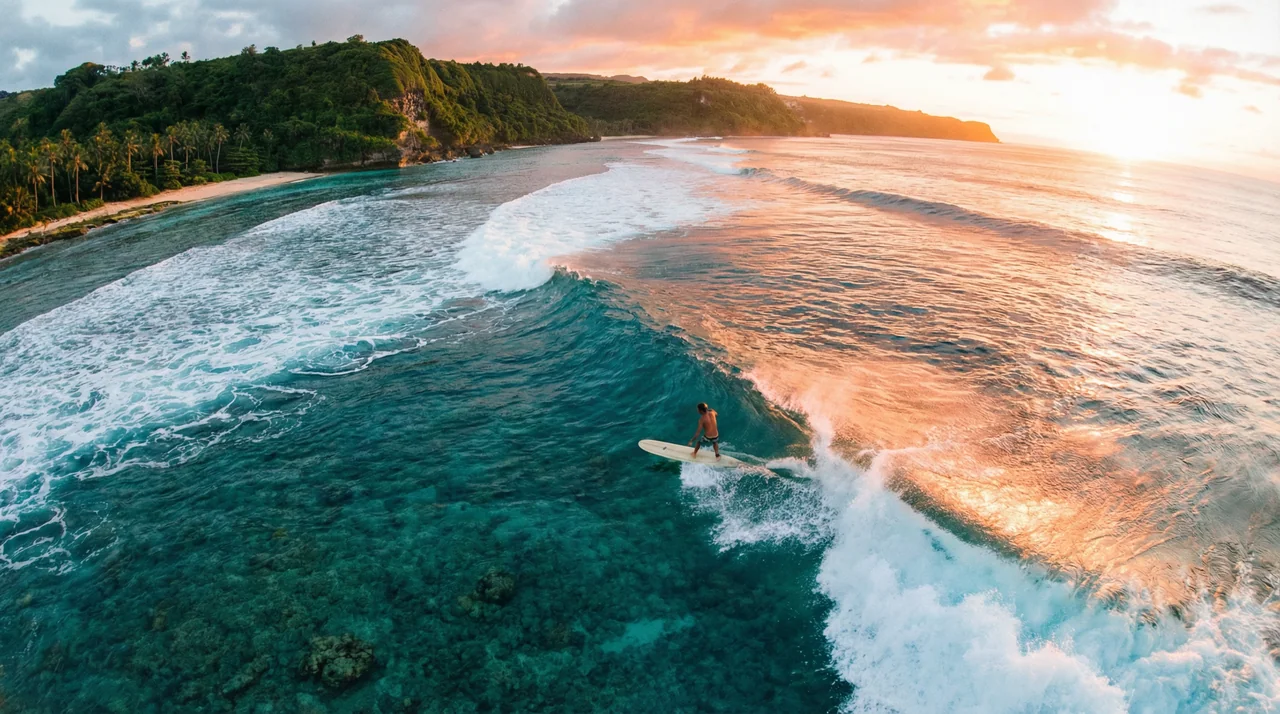
By region, by level, by swell season — everything you need to plan the surf trip of your life.
The world's best surf destinations are not a fixed list. They shift with the seasons, with your skill level, with your budget, and with what you are actually looking for from a surf trip. The hollow reef barrels of the Mentawais are not better than the long, mellow point breaks of Morocco — they are simply different, suited to different surfers at different moments in their surfing lives.
What this guide attempts to do is give you the honest, specific information that most surf travel articles avoid: the exact breaks, the real swell windows, the crowd dynamics, the dangers, and the kind of local knowledge that usually only comes from having been there. We have covered every major surf region on the planet, from the Arctic waves of Norway to the tropical perfection of the Maldives, so you can make the right call for your next trip.
Europe: Cold Water, World-Class Waves
Europe is consistently underestimated as a surf destination. The Atlantic coastline from Norway to the Canary Islands intercepts some of the most powerful groundswells on earth, generated by North Atlantic depressions that track across the ocean for thousands of miles before arriving at the coast. The result is a region with extraordinary wave variety — from the hollow beach breaks of France to the long point breaks of Morocco's northern tip, from the Arctic swells of Norway to the year-round warmth of the Canaries.
Portugal: Europe's Surf Capital
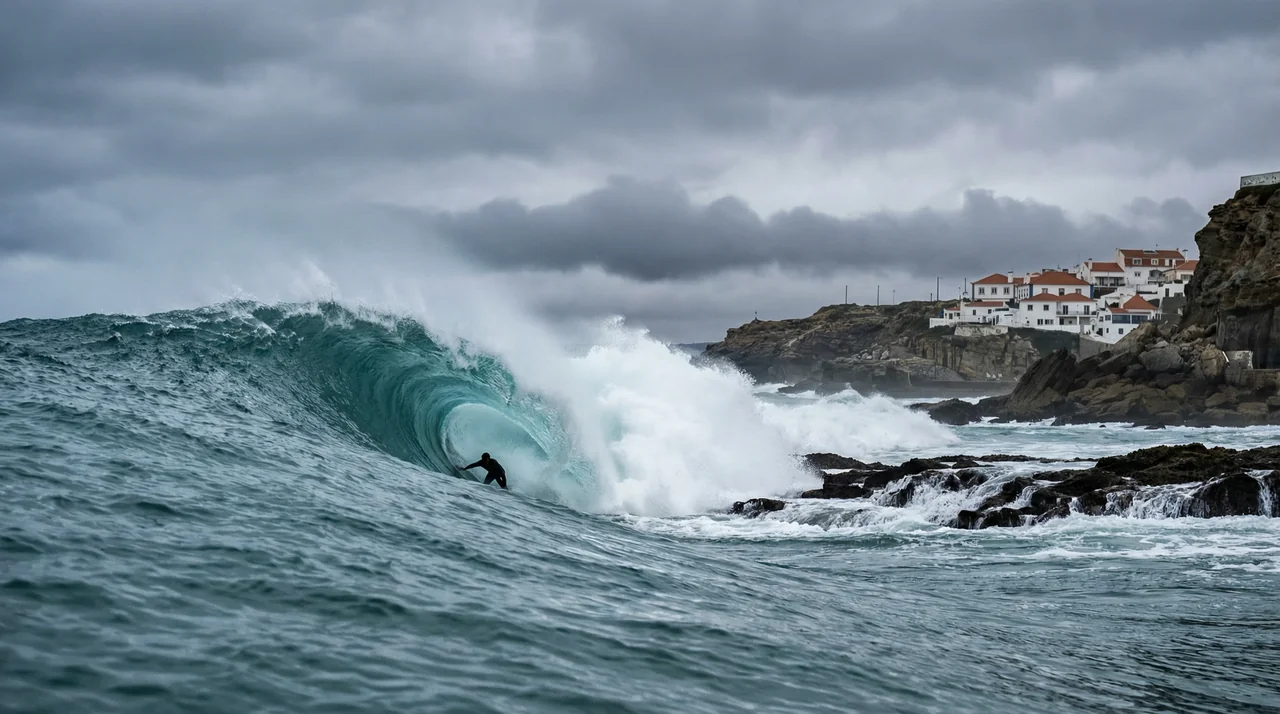
Portugal is the undisputed number one surf destination in Europe. The country's long, west-facing coastline is fully exposed to North Atlantic groundswells, and the combination of consistent surf, warm climate, affordable living costs, and a deeply embedded surf culture makes it the obvious first stop for any European surfer.
Ericeira
Ericeira, 45 minutes north of Lisbon, is Europe's first and only World Surfing Reserve — a designation that recognises both the quality of the waves and the community built around them. Within just four kilometres of coastline, you have eight distinct world-class breaks.
Ribeira d'Ilhas is the flagship: a long, winding right-hand reef break that hosts WSL Championship Tour events and offers consistent, quality waves for intermediate to advanced surfers. The wave peels along a rocky reef point, giving surfers time to set up turns and find their rhythm.
Coxos, a short drive north, is a completely different proposition — a fast, powerful right-hander that breaks over a shallow, uneven reef and is widely considered one of the best waves in Europe. It is strictly for experienced surfers who can handle a critical takeoff and a shallow reef consequence.
Foz do Lizandro provides a more forgiving beach break environment, with multiple peaks suitable for beginners and intermediates, and is where most of the area's surf schools operate.
Peniche
Peniche, 90 minutes north of Lisbon, is a peninsula that catches swell from three directions simultaneously, meaning it almost always has somewhere working regardless of wind or swell direction.
Supertubos is the crown jewel — a world-class beach break that produces some of the heaviest, most hollow barrels in Europe during autumn and winter. On a good day, the waves are regularly compared to Puerto Escondido: fast, powerful, and unforgiving. It hosts the MEO Pro Portugal on the WSL Championship Tour every autumn.
Baleal Bay and Prainha offer gentle, protected waves ideal for beginners year-round, making Peniche one of the best all-round surf destinations in Europe for mixed-level groups.
The best time to visit Portugal for quality waves is September through November, when powerful North Atlantic swells arrive consistently and the summer crowds have thinned. Water temperature ranges from 16°C in winter to 22°C in late summer — a 3/2mm wetsuit covers most of the year.
Browse surf camps in Portugal on WaveCamps — or go straight to Ericeira surf camps and Peniche surf camps if you already know where you want to be.
France: The Barrel Factory
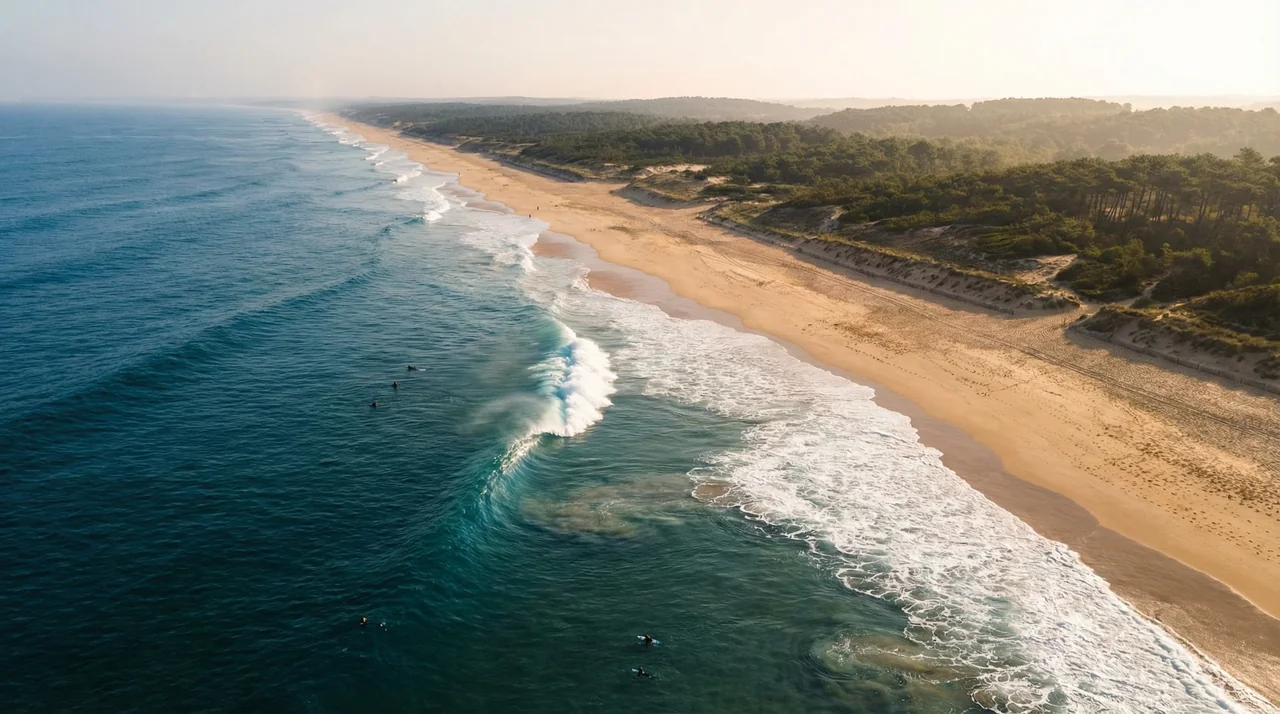
The Landes coast of southwest France — a 100km stretch of pine forest and sand dunes between Bordeaux and Biarritz — is home to some of the best beach breaks in the world. The reason is geological: deep offshore canyons funnel Atlantic groundswells directly onto the sandbars with extraordinary consistency, producing powerful, hollow waves that have made this stretch of coastline the training ground for generations of professional surfers.
Hossegor
Hossegor is the epicentre of French surfing. La Gravière is a world-class, heavy, sand-charged beach break producing powerful barrels up to 12 feet, with a shorebreak that can be genuinely dangerous on big days. It is the wave that draws professionals from around the world every autumn and hosts the Quiksilver Pro France on the WSL Championship Tour.
La Nord is Hossegor's answer to the North Shore — an expert-only break that can handle waves well over three metres, offering near-vertical take-offs into fast, hollow barrels. Both breaks are strictly for experienced surfers.
La Sud provides a more sheltered, beginner-friendly option with head-high waves in spring and autumn, and is where most surf schools operate in the summer months.
The Landes Coast
Further south, Les Estagnots in Seignosse and La Piste in Capbreton offer more heavy, fast hollow beach breaks for experienced surfers. The whole stretch of coast is remarkably consistent — if one spot is blown out, another will be working. In summer, the same beaches mellow out considerably, making the Landes coast one of the best places in Europe for beginner and intermediate surf camps.
Browse surf camps in France on WaveCamps.
The Canary Islands: Europe's Hawaii
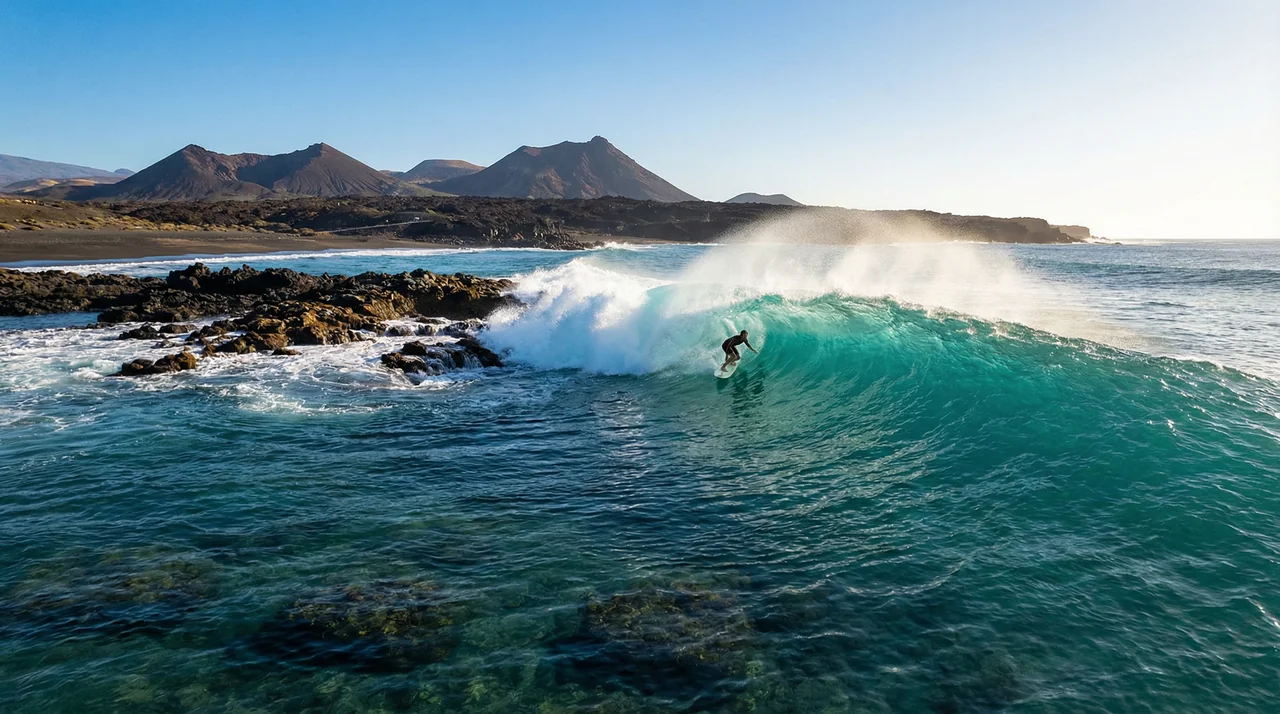
The Canary Islands sit off the coast of West Africa, 1,500 kilometres south of mainland Spain, and they receive consistent Atlantic swells year-round. Water temperature rarely drops below 19°C, making them the go-to winter escape for European surfers who want quality waves without the cold.
Lanzarote
Lanzarote is the most surf-focused island. La Santa is a powerful, hollow right-hand reef break that breaks over a shallow volcanic reef and is strictly for experienced surfers.
El Quemao is the island's most challenging wave — a fast, heavy left-hand barrel over a very shallow reef that hosts an annual invitational drawing top-level surfers from around the world. It is expert-only and demands absolute respect.
Caleta de Famara is the complete contrast: a three-mile long beach break with consistent swells, multiple peaks, and — uniquely — a designated localism-free zone, making it one of the most welcoming spots in Europe for traveling surfers of all levels.
Fuerteventura
Fuerteventura offers the most variety. The north coast around El Cotillo provides mellow, beginner-friendly beach breaks in summer, while the reef breaks at Punta Blanca and El Hierro (known as "The Bubble") deliver powerful, hollow barrels for advanced surfers in winter.
The Canaries work year-round, but October to March is the prime season for powerful swells and offshore winds.
Browse surf camps in the Canary Islands on WaveCamps.
Spain (Basque Country): Mundaka and the Northern Powerhouse
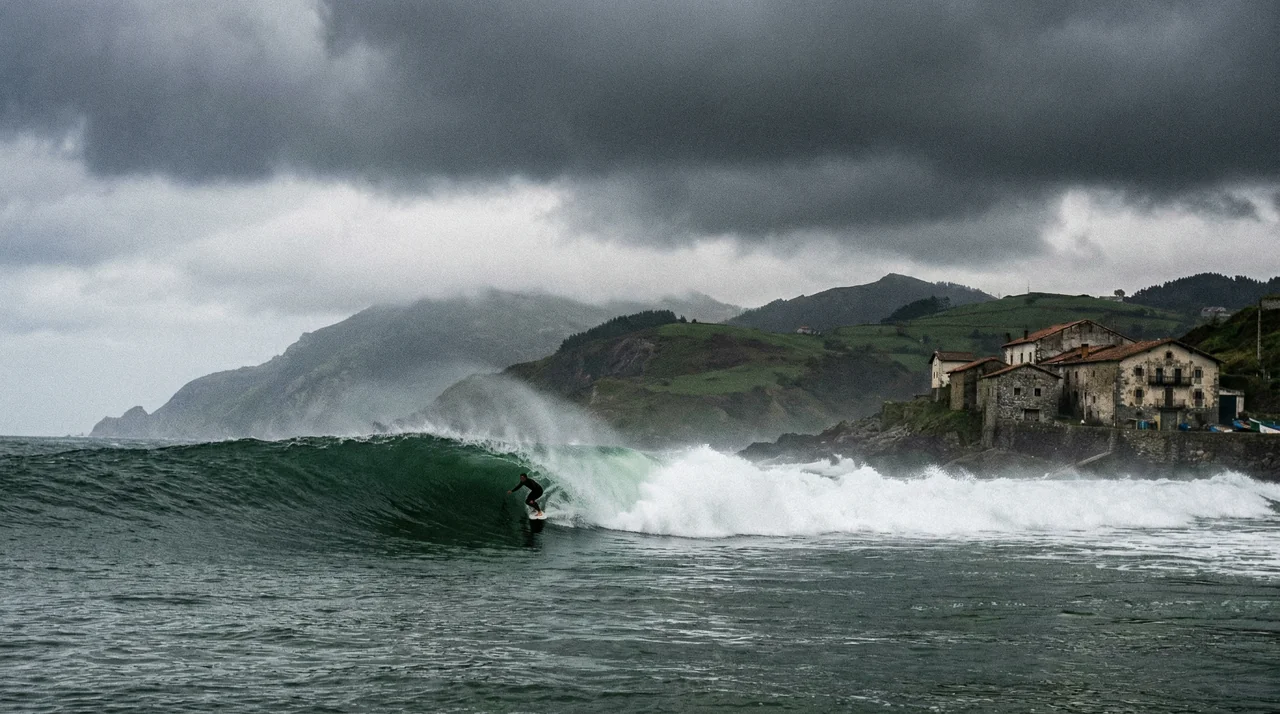
The Basque Country in northern Spain is home to one of the most coveted waves in Europe.
Mundaka
Mundaka is a world-class left-hand barrel that breaks off a sandbar at the mouth of the Urdaibai estuary, capable of producing rides of up to 400 metres on a good day. It is one of those waves that surfers travel specifically to surf — not as part of a broader trip, but as the destination itself. The wave is strictly for advanced surfers and requires precise timing: it only works on a dropping tide with a northwest swell, and when it is on, the lineup fills quickly with locals who have been surfing it since childhood.
Zarautz
Zarautz offers a more accessible high-performance beach break capable of handling waves up to 13 feet, with conditions suitable for multiple skill levels. The Basque Country is best from October to February, when consistent northwest swells and offshore southern winds create ideal conditions. Water is cold year-round — a 4/3mm wetsuit with boots and gloves is standard in winter.
Browse surf camps in the Basque Country on WaveCamps.
United Kingdom: Cold, Powerful, and Underrated
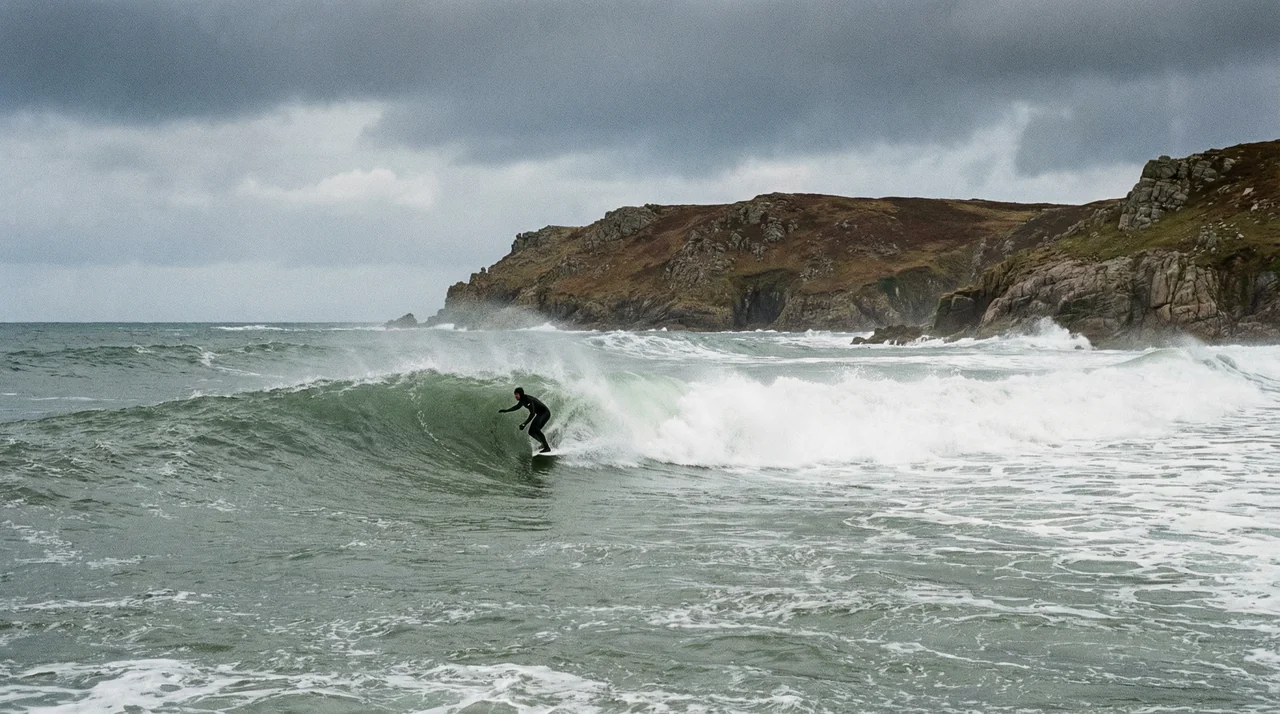
The UK is not the first place most people think of when planning a surf trip, but it should be on every serious surfer's radar.
Cornwall
Cornwall is the heartland of UK surfing. Fistral Beach in Newquay is the most famous break — a consistent beach break with multiple peaks that works across a wide range of swell sizes and directions. For experienced surfers, Porthleven on the south Cornish coast is a heavy, hollow reef break that produces some of the best waves in England on a big southwest swell.
Scotland
Scotland is where UK surfing gets genuinely world-class. Thurso East in the far north is a right-hand reef break that is widely considered one of the best waves in Europe — a fast, hollow, powerful barrel that breaks over a flat rock shelf and produces perfect, hollow waves on a north swell with a southerly wind. It is cold (water temperature drops to 8°C in winter), remote, and demanding, but the quality of the wave is undeniable. It has hosted WSL Championship Tour events and regularly produces waves that rival anything in Portugal or France.
Browse surf camps in the UK on WaveCamps.
Ireland: The Wild Atlantic Way
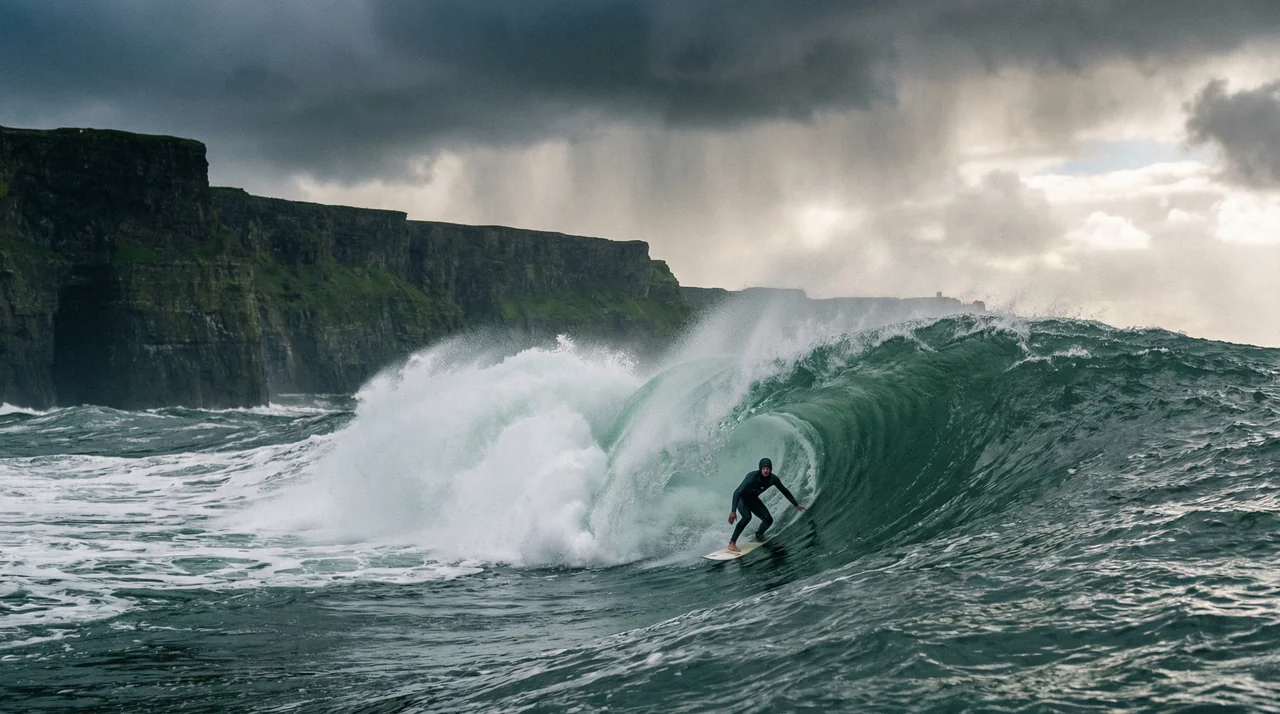
Ireland's west coast faces the full force of the North Atlantic, and the result is some of the most powerful and consistent surf in Europe.
Bundoran
Bundoran in County Donegal is Ireland's surf capital. The Peak is the town's signature wave: a powerful, hollow right-hand reef break that produces some of the best barrels in Ireland. Tullan Strand, just north of town, offers a long, sandy beach break suitable for beginners and improvers.
Lahinch and Aileens
Further south, Lahinch in County Clare is another major surf hub with a strong school scene and consistent beach break. And for the most committed big wave surfers, Aileens — a massive slab break that breaks under the Cliffs of Moher — is one of the most dramatic big wave spots in the world, producing waves of 30 feet or more on a big northwest swell. It is accessible only by boat and is strictly for elite big wave surfers.
Browse surf camps in Ireland on WaveCamps.
Cold Hawaii, Denmark: Scandinavia's Surf Secret
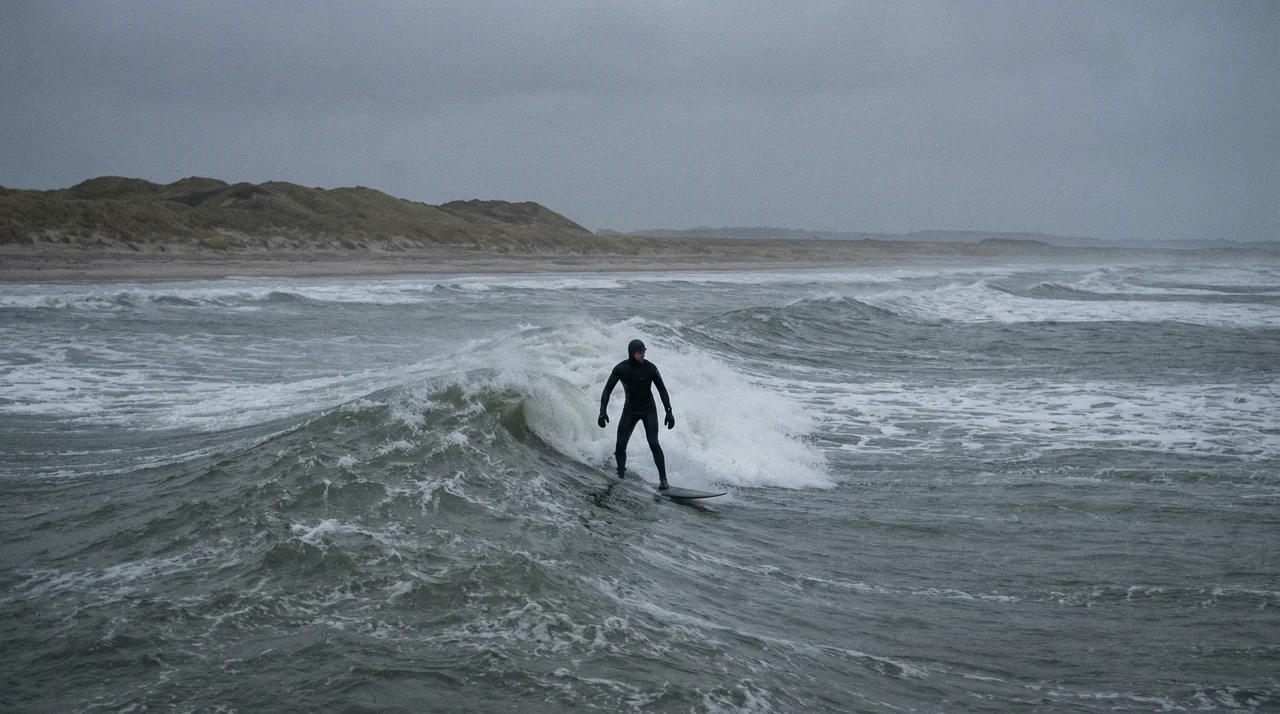
Klitmøller — nicknamed "Cold Hawaii" — is a small fishing village on the northwest coast of Denmark's Jutland peninsula, and it is one of the most surprising surf destinations in the world. The North Sea and the Skagerrak funnel powerful windswells and groundswells onto the coastline, producing waves that are far better than most people expect from Denmark.
Bunkers
Bunkers is the area's most famous break — a powerful reef break that works on northwest groundswells and produces hollow, fast waves for experienced surfers. The break gets its name from the World War II bunkers that line the dunes above the beach.
Yderhavn
Yderhavn is a more forgiving beach break suitable for intermediate surfers. The best surf season runs from October to March, when North Sea storms generate consistent swells. Water temperature drops to 4°C in winter, requiring a 6/5mm wetsuit with boots, gloves, and hood.
Norway: Surfing Under the Northern Lights
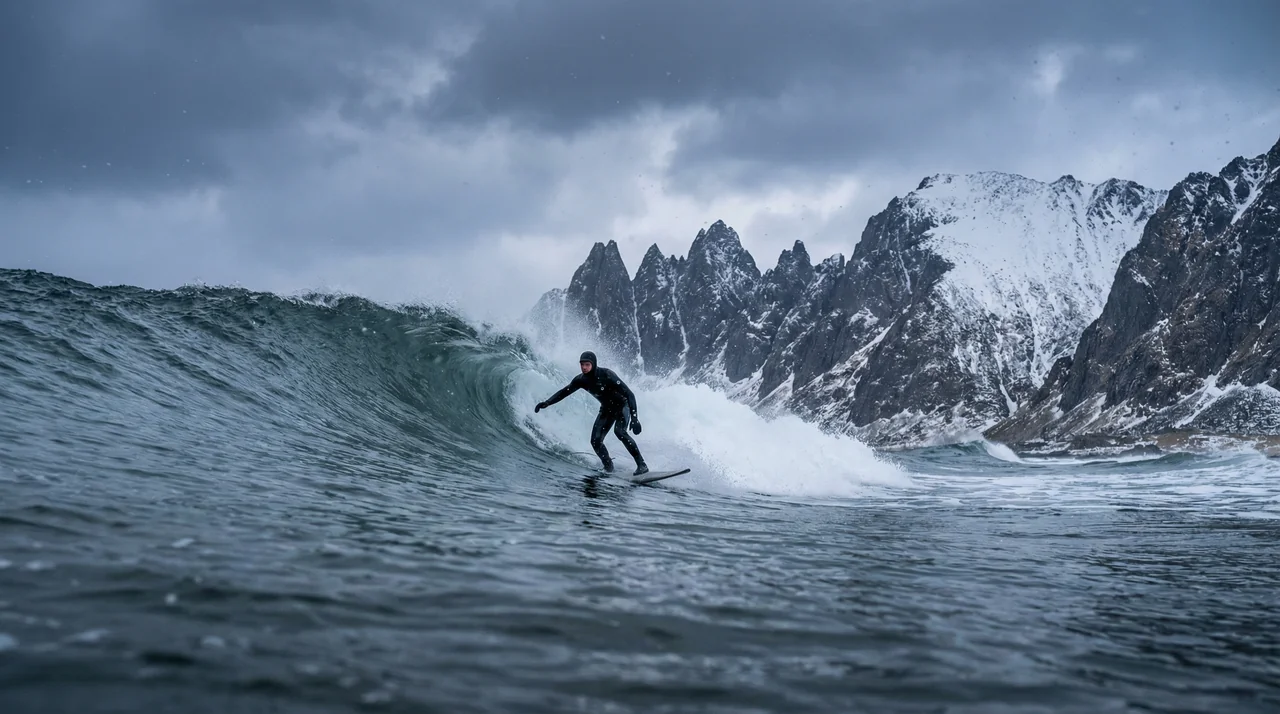
Norway is the most extreme surf destination in Europe, and arguably one of the most visually spectacular surf destinations on earth.
Unstad Beach, Lofoten Islands
Unstad Beach sits at 68°N, well above the Arctic Circle — the northernmost surf spot in the world that is regularly surfed. The setting is almost impossibly dramatic: jagged mountain peaks rising directly from the sea, snow on the ground, and waves breaking in water that rarely exceeds 10°C even in summer.
The waves at Unstad are a mix of beach break and point break, working best on northwest swells with a southerly wind. The quality is genuinely good — not just good for Norway, but good by any standard. The swell window runs year-round, but the most consistent surf arrives from October to March, when North Atlantic storms generate powerful groundswells. In winter, surfers can experience the Northern Lights from the water — an experience available nowhere else on earth.
Africa: Long Lines and Desert Landscapes
Morocco: The European Winter Escape
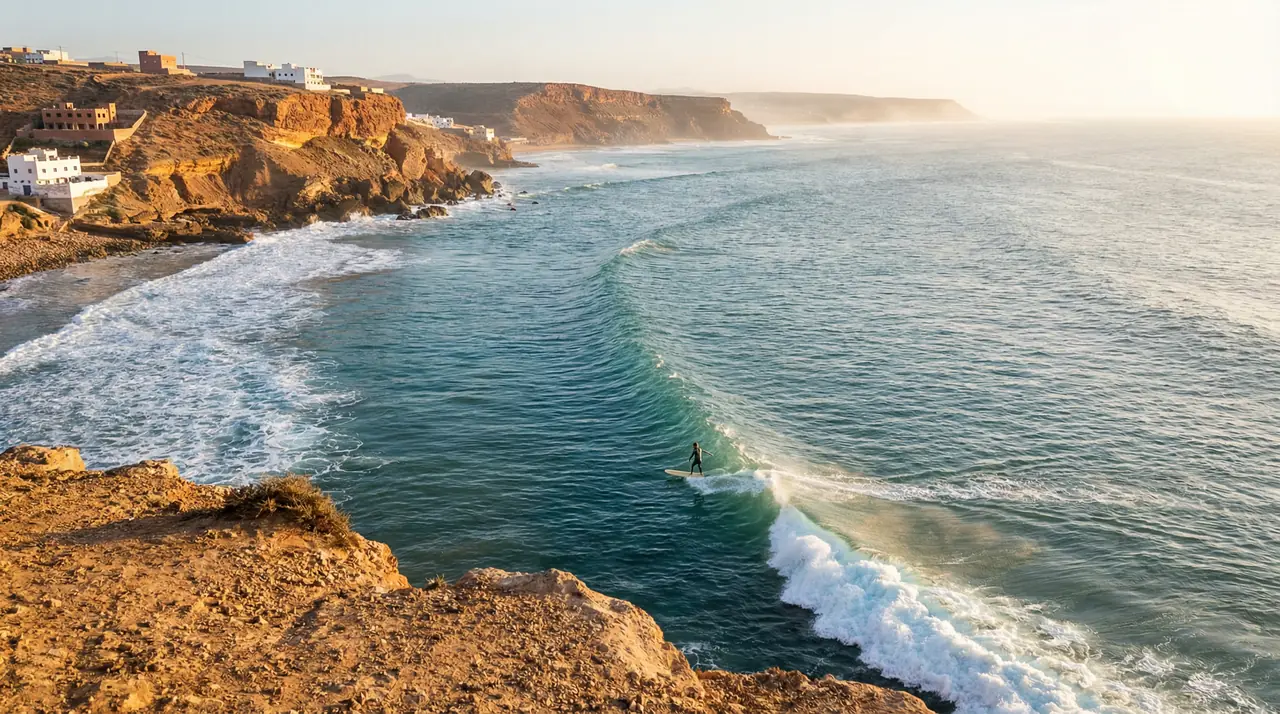
Morocco has become the default winter surf destination for European surfers, and the area around Taghazout — a small Berber fishing village 20 kilometres north of Agadir — is the reason why. The coastline here is lined with a series of world-class right-hand point breaks that light up from October to March when North Atlantic groundswells push south.
Anchor Point
Anchor Point is Morocco's most famous wave — a long, peeling right-hander that breaks off a rocky headland and can produce rides of over 300 metres on a good day. It suits intermediate to advanced surfers and is the wave most visitors come to ride.
Killer Point and Boilers
Killer Point, a short drive north, is a step up in intensity — a long, powerful right that can peel for up to 500 metres, with hollow sections and a challenging paddle out through a rocky channel. It is strictly for experienced surfers. Boilers breaks near a rusting shipwreck and offers fast, powerful barrels for upper intermediates and experts.
Hash Point and La Source
Hash Point provides a more playful, semi-mellow right suitable for all levels, right in the village. La Source, a short walk south of Taghazout, offers forgiving A-frames at mid-tide, ideal for beginners and improvers.
The combination of desert landscapes, ancient medinas, mint tea, and world-class waves makes Morocco one of the most memorable surf destinations on earth. The cost of living is extremely low, the surf camp scene around Taghazout is well-developed and welcoming, and the food — tagines, fresh fish, flatbreads — is exceptional.
Browse surf camps in Morocco on WaveCamps.
South Africa: The Ultimate Right-Hander
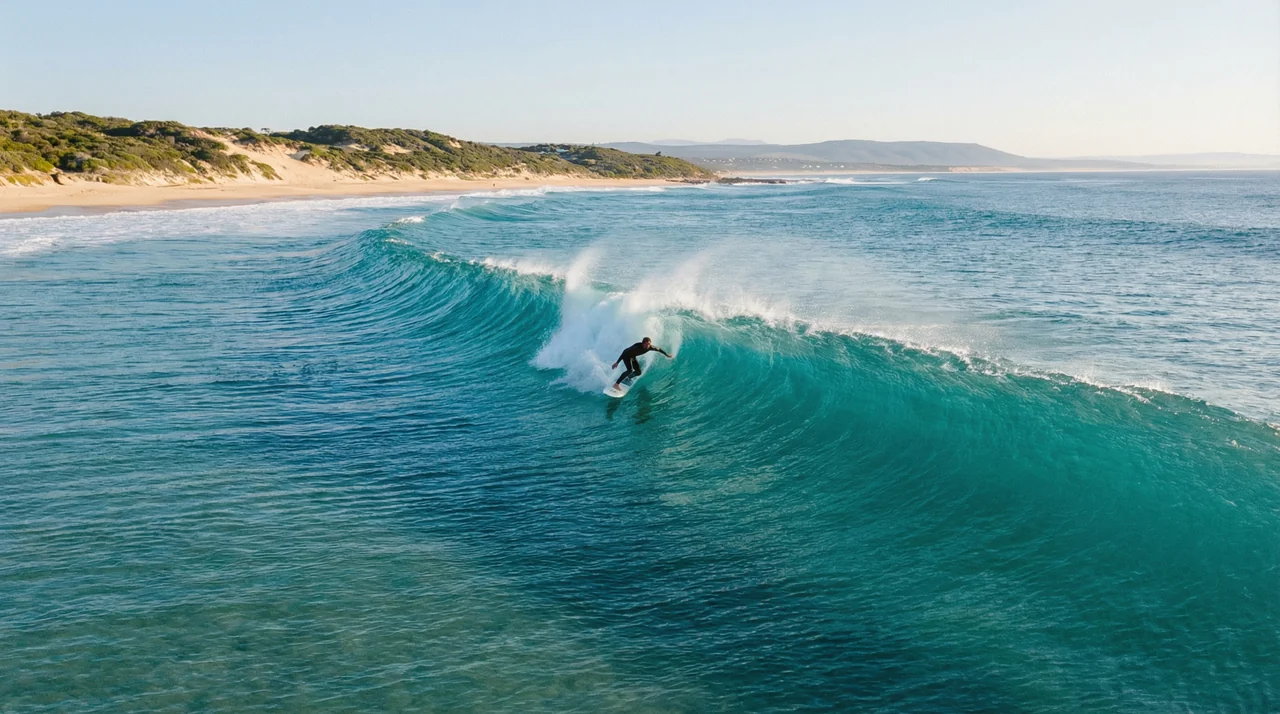
Jeffreys Bay — universally known as J-Bay — is widely considered the best right-hand point break on the planet. Located on the Eastern Cape coast of South Africa, it is a pilgrimage site for surfers from around the world.
Supertubes
On a good day, J-Bay connects through multiple sections — Boneyards, Supertubes, Impossibles, and Point — for rides of over 800 metres. The Supertubes section is the centrepiece: a fast, hollow, perfectly shaped barrel that has been the backdrop for some of the most iconic surf footage ever filmed. The WSL Championship Tour stops here every July.
The Point and Kitchen Windows
For less experienced surfers, The Point offers a more mellow and forgiving long right-hand reef break, ideal for intermediates to practice turns and build confidence. Kitchen Windows provides a user-friendly reef and beach break where surf schools operate and beginners can learn safely.
The peak season runs from May to August, when consistent southwest swells and offshore winds create the renowned long, right-hand point breaks.
The Indian Ocean
The Maldives: Tropical Perfection
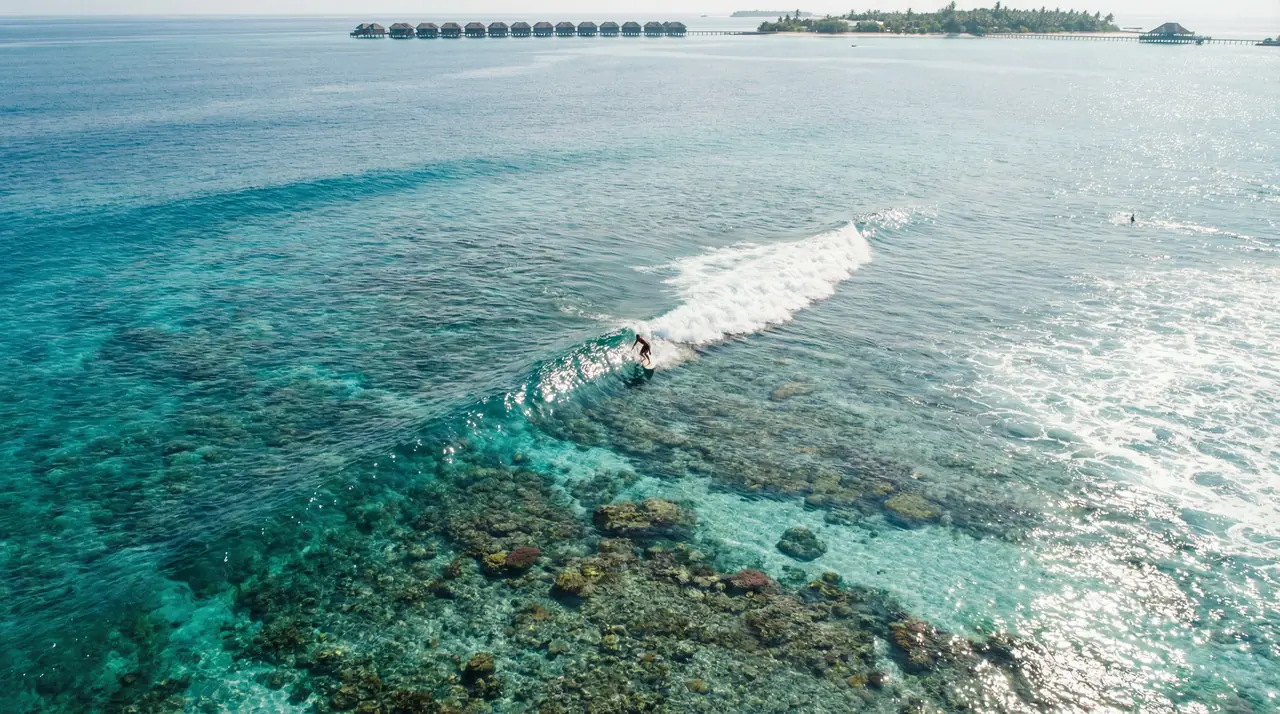
The Maldives is the most exclusive surf destination on this list — not because the waves are the best in the world, but because the combination of warm, crystal-clear water, consistent Indian Ocean swells, and an extraordinary natural setting makes it unlike anywhere else.
Pasta Point
Pasta Point is the most famous wave — a long, mechanically perfect left-hand reef break that peels consistently at 4–6 feet and rarely closes out. It is exclusive: the break is accessible only to guests of the adjacent Dhonveli Resort, making it one of the least crowded world-class waves on earth.
Cokes, Chickens, Sultans and Jailbreaks
Cokes on Thulusdhoo Island is a fast, hollow right-hander, best for advanced surfers. Chickens is a long, fast left-hand break offering more forgiving conditions for strong intermediate surfers. Sultans is a powerful, consistent right-hander capable of producing long, walling rides. Jailbreaks is a long, fast left that breaks in the outer reef and offers some of the longest rides in the Maldives.
Access is almost exclusively via liveaboard surf charter or surf resort. The best season runs from April to October, with April to June offering the best combination of consistent swell and glassy conditions.
Browse surf camps in the Maldives on WaveCamps.
Sri Lanka: The Underrated Gem
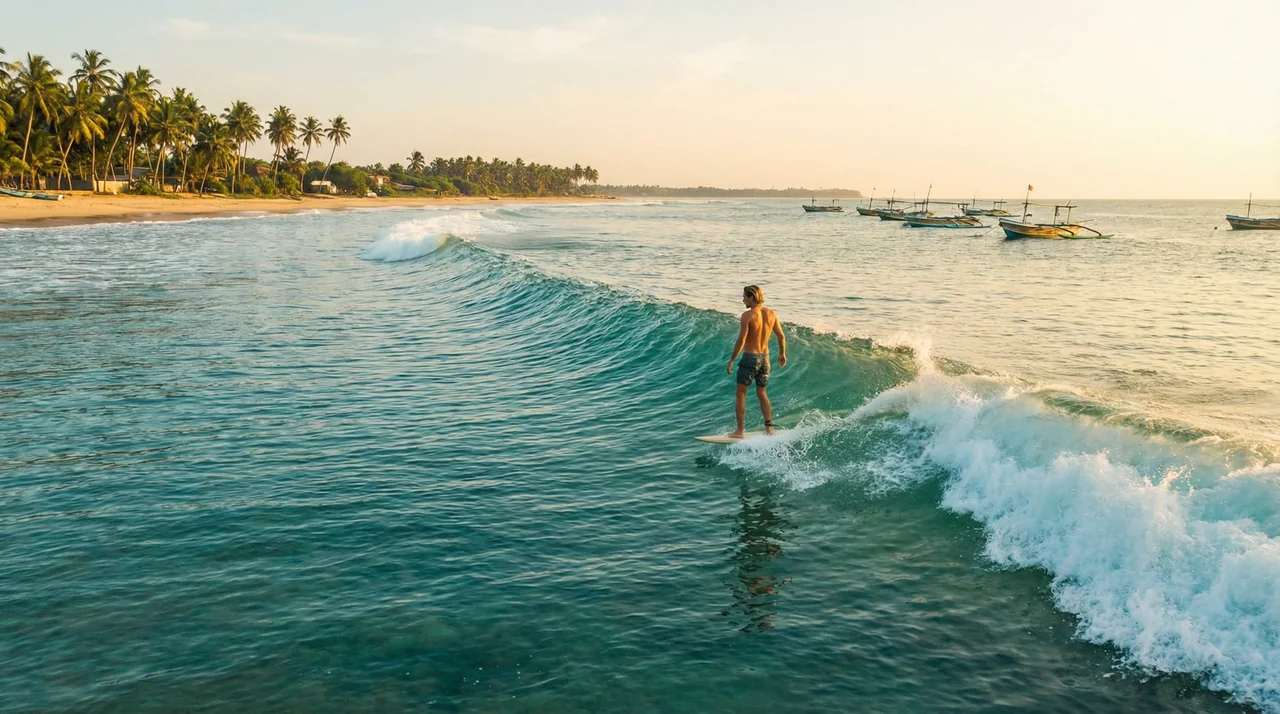
Sri Lanka uniquely offers two distinct surf seasons on opposite coasts, meaning there is almost always somewhere working. The southwest coast runs from November to April; the east coast from May to September.
Arugam Bay
Arugam Bay's Main Point on the east coast is a classic right-hand point break producing long, peeling waves for intermediate to advanced surfers, and is widely considered one of the best waves in Asia for its consistency and accessibility.
Hikkaduwa and Midigama
Hikkaduwa on the southwest coast offers a fun reef break right in front of town. Midigama, a short drive south, has a cluster of mellow point breaks — Coconuts and Ram's — ideal for intermediates and longboarders.
Sri Lanka's reef breaks are generally deeper than those in Indonesia, making them significantly more forgiving. The ability to combine a surf trip with world-class wildlife safaris, ancient cultural sites, and exceptional food makes it one of the best-value surf destinations on the planet.
Browse surf camps in Sri Lanka on WaveCamps.
Asia: Tropical Perfection
Bali, Indonesia: The Promised Land
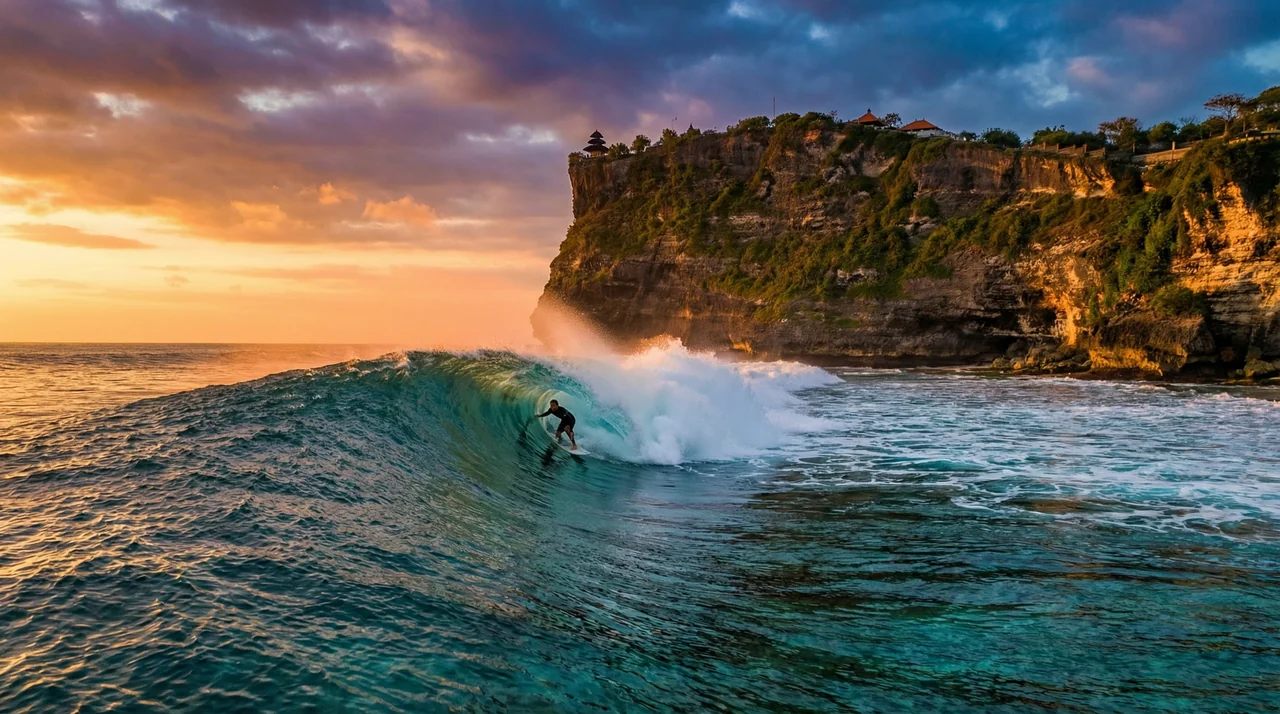
Bali is the surf destination that needs no introduction. The Bukit Peninsula in south Bali is one of the most wave-dense stretches of coastline on earth.
Uluwatu
Uluwatu is the flagship break — a consistent, high-performance left-hand reef break with multiple sections. The Temples section offers long, winding walls for intermediate surfers. Further down the reef, The Racetrack and Outside Corner produce fast, powerful, hollow waves for advanced surfers.
Padang Padang and Bingin
Padang Padang — known as the "Balinese Pipeline" — is a tight, hollow left-hander that breaks over a shallow reef and is strictly for expert surfers. Bingin is an intense, short left-hand reef break renowned for its consistent, predictable barrels — widely considered one of the easiest places in Bali to get barreled for experienced surfers.
Canggu
For beginners and intermediates, Canggu is the answer. Batu Bolong offers a consistent, rolling beach break with long reforming rights and lefts, perfect for learning. The dry season from April to October brings consistent Indian Ocean swells and cool offshore winds to the west coast. Water temperature stays at a comfortable 27–29°C year-round.
Browse surf camps in Bali on WaveCamps — or explore all surf camps in Indonesia including the Mentawai Islands.
Mentawai Islands: The Most Perfect Waves on Earth
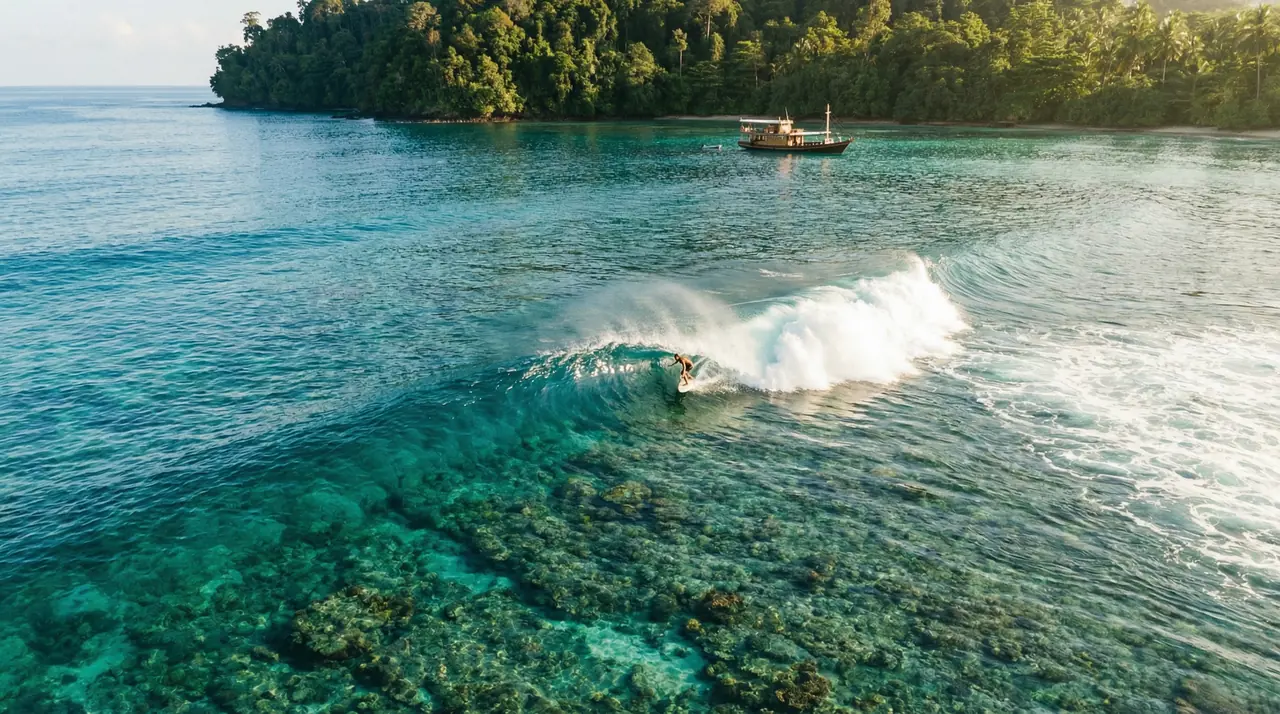
If Bali is the gateway drug of Indonesian surfing, the Mentawai Islands are the deep end. Located off the west coast of Sumatra, this remote archipelago contains more world-class surf breaks per square kilometre than anywhere else on the planet — over 70 named breaks, many of which are rarely surfed.
Hollow Trees (HT's)
Hollow Trees is the most famous — a long, powerful left-hand barrel that breaks over a shallow reef and produces some of the most consistent, photogenic tubes in the world. The inside section, known as the "surgeon's table," breaks over extremely shallow reef and is responsible for a significant number of reef injuries.
Macaronis
Macaronis is a more forgiving, perfectly shaped left-hand point break that offers long, winding rides and is considered accessible for strong intermediate surfers.
Rifles and Lance's Right
Rifles is a fast, hollow right-hander that breaks over a sharp reef, strictly for experienced surfers. Lance's Right is a long, walling right-hander that offers more forgiving conditions and is suitable for intermediate surfers on smaller days.
Access is almost exclusively via liveaboard surf charter from Padang, Sumatra. The peak season runs from May to September.
Browse Mentawai surf camps on WaveCamps.
Japan: The Unexpected Surf Nation
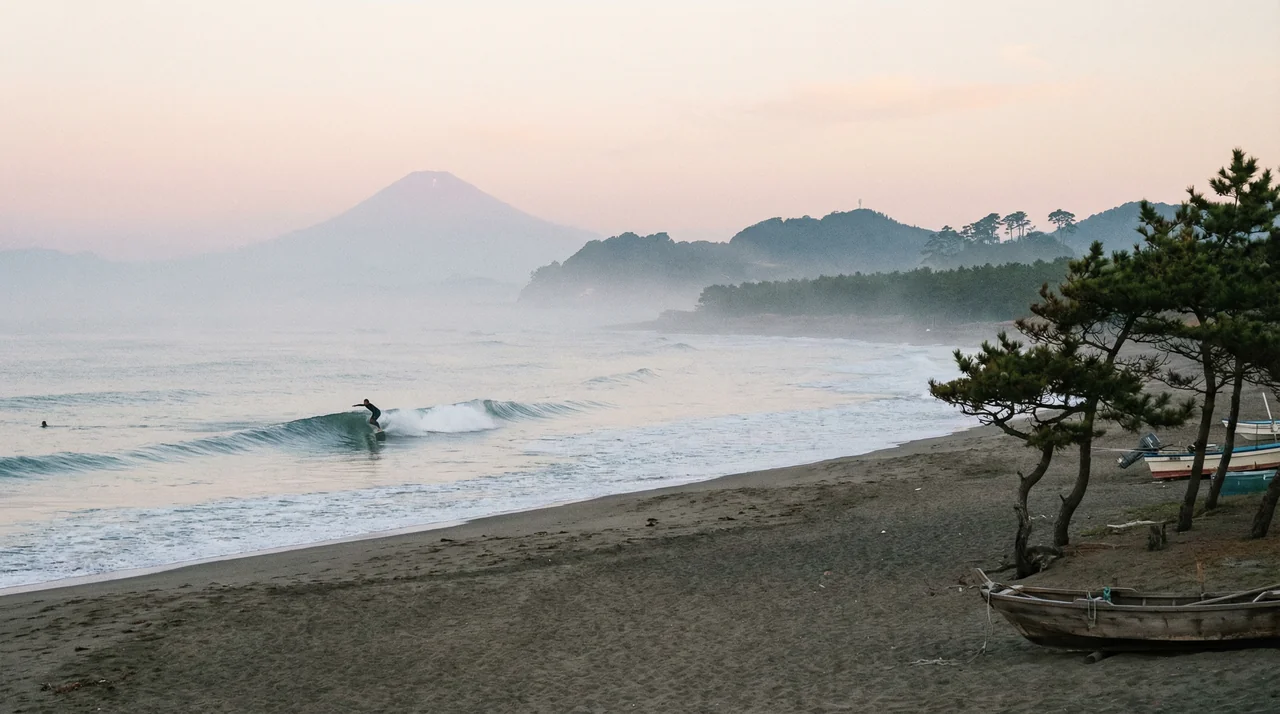
Japan is one of the most surprising surf destinations in the world. The country has a coastline of over 29,000 kilometres, exposed to swells from the Pacific, the Sea of Japan, and the East China Sea. Japan has over 3 million surfers — more than any country in Europe — and the waves, while not as powerful as Indonesia or Hawaii, are consistent, varied, and often excellent.
Chiba Prefecture
Chiba Prefecture, an hour from Tokyo, is the most accessible surf region. Ichinomiya Beach on the Kujukuri coastline hosted the surfing events at the Tokyo 2020 Olympics. The area has dozens of beach breaks along a 60km stretch of coast, working best on northeast swells generated by Pacific typhoons.
Miyazaki and Niijima
Miyazaki Prefecture on the island of Kyushu is Japan's most dedicated surf region — the city of Miyazaki has more surf shops per capita than almost anywhere in the world. Niijima Island, two hours by ferry from Tokyo, is Japan's most celebrated surf destination for quality waves, with a powerful, consistent beach break that works on northeast swells.
Japan's surf culture is unique: the lineups are disciplined and respectful, the equipment is high-quality, and the post-surf ritual of ramen and sake is non-negotiable.
Browse surf camps in Japan on WaveCamps.
The Americas
California: The Birthplace of Modern Surfing
California is where modern surf culture was born, and it remains one of the most important surf destinations in the world.
Malibu and Lower Trestles
Malibu's Surfrider Beach is a classic right-hand point break that has been surfed since the 1950s, producing long, winding rides perfect for longboarders and intermediate shortboarders. Lower Trestles in San Clemente is widely considered the best performance wave in California — a high-quality beach break with both lefts and rights, consistent swell, and excellent shape. It hosts the Surf Ranch Pro on the WSL Championship Tour.
Steamer Lane and Mavericks
Steamer Lane in Santa Cruz is the most iconic surf spot in Northern California — a set of reef breaks on a rocky headland that produce powerful, hollow waves for intermediate to advanced surfers. For big wave surfers, Mavericks near Half Moon Bay produces waves of 20–60 feet during winter swells.
Hawaii: The Mecca
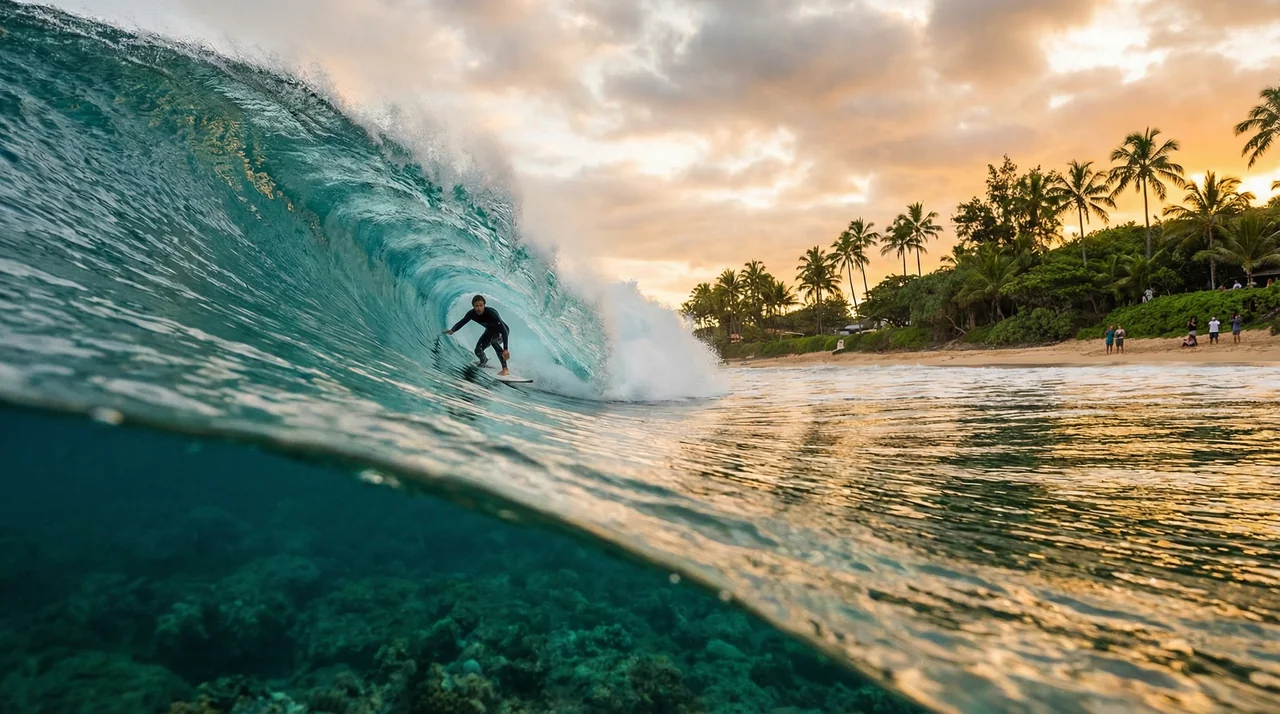
Hawaii is the spiritual home of surfing — the place where the sport was born, where the sport's greatest waves are found, and where the sport's most important history was made.
Pipeline
Pipeline — officially Banzai Pipeline — is the most iconic surf break on earth. A shallow, hollow left-hand reef break that produces perfect, cylindrical barrels of extraordinary power and beauty, it breaks over a lava reef in just a few feet of water and has claimed more lives than almost any other wave in the world. The wave is strictly for elite surfers.
Sunset Beach and Haleiwa
Sunset Beach, a short drive west, is a massive, powerful right-hand point break that handles waves of 15–25 feet and hosts the Vans Triple Crown of Surfing every winter. Haleiwa is the most accessible of the North Shore breaks, suitable for advanced surfers.
Jaws, Maui
On Maui, Pe'ahi — known as "Jaws" — produces waves of 40–80 feet during the biggest winter swells and is accessible only by jet ski. The North Shore season runs from November to February. Water temperature is a comfortable 24–26°C year-round.
Nicaragua: Central America's Best-Kept Secret
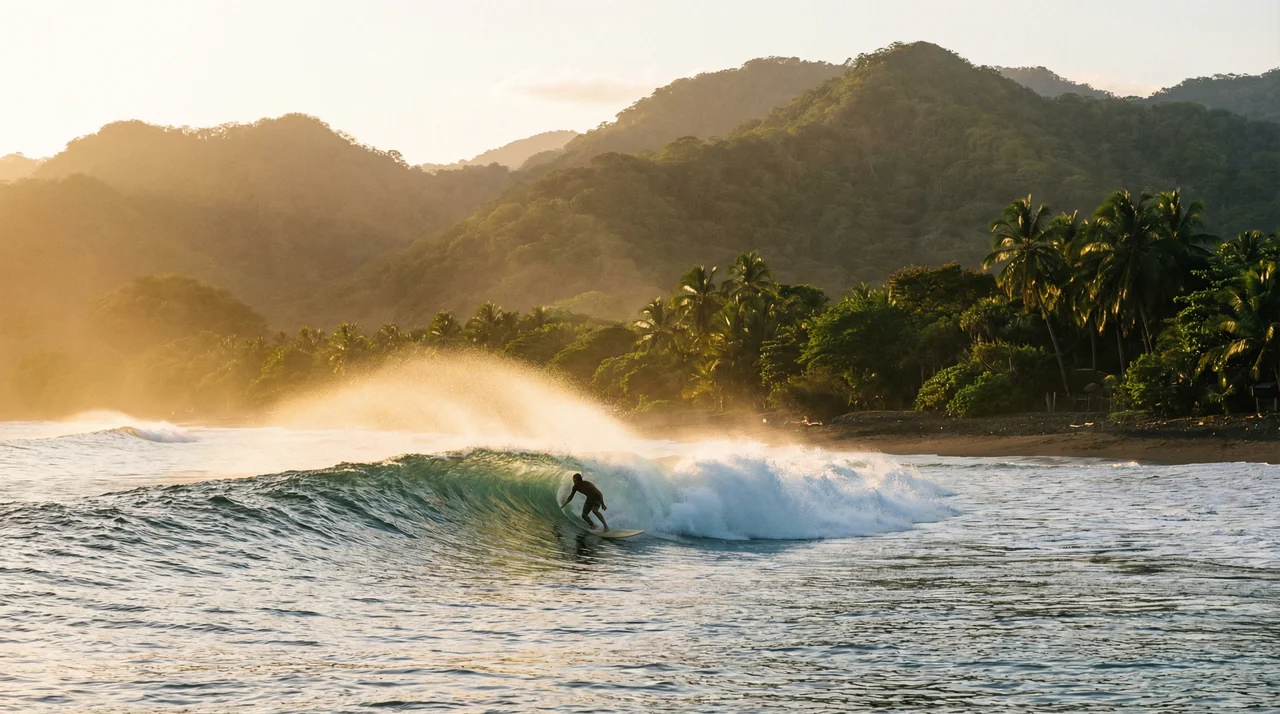
Nicaragua is one of the most underrated surf destinations in the world. The Pacific coast receives consistent south and southwest swells year-round, the cost of living is among the lowest in Central America, and the crowds are a fraction of what you will find in Costa Rica or Bali.
Popoyo and Playa Colorado
Popoyo is the area's most famous break — a powerful, hollow right-hand reef break that produces fast, barreling waves for intermediate to advanced surfers. Playa Colorado, a short drive north, is a powerful beach break with both lefts and rights, producing some of the most powerful waves in Nicaragua.
Aposentillo
Aposentillo is a more mellow beach break suitable for beginners and intermediates. The best season runs from April to October, when south swells are most consistent and powerful. Water temperature is a warm 27–29°C year-round.
Browse surf camps in Nicaragua on WaveCamps.
Costa Rica: Pura Vida and Perfect Waves
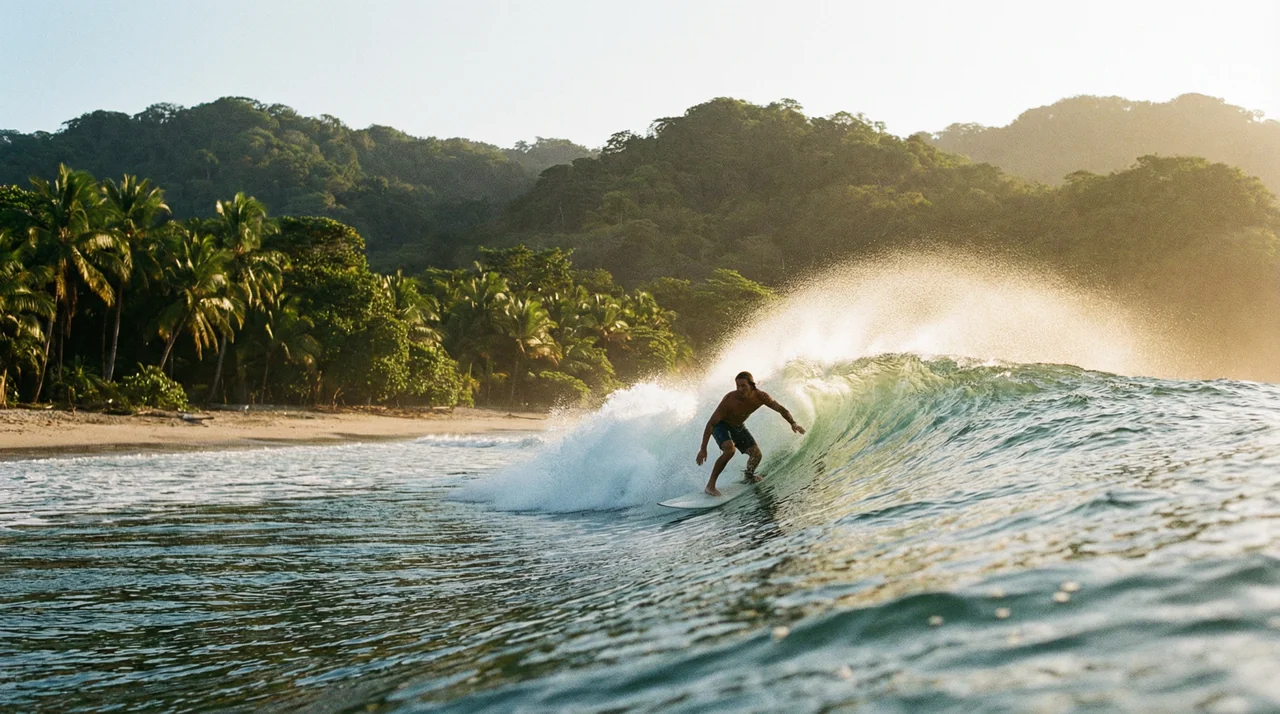
Costa Rica is the gateway drug of surf travel — accessible, warm, consistent, and endlessly enjoyable.
Nosara (Playa Guiones)
Playa Guiones in Nosara is the standout — a long, crescent-shaped beach with multiple peaks, known for consistent, user-friendly waves that work well for beginners and intermediates. The surf school scene here is excellent and the town has a strong wellness and yoga culture alongside it.
Santa Teresa
Santa Teresa offers a mix of beach breaks and rocky reef points for all levels. The vibe is bohemian and laid-back, with a strong international surf community.
Pavones
For advanced surfers, Pavones in the far south offers one of the longest left-hand point breaks in the world — on a good south swell, rides can last for nearly a mile.
Browse surf camps in Costa Rica on WaveCamps.
The Pacific
Australia: The Complete Surf Nation
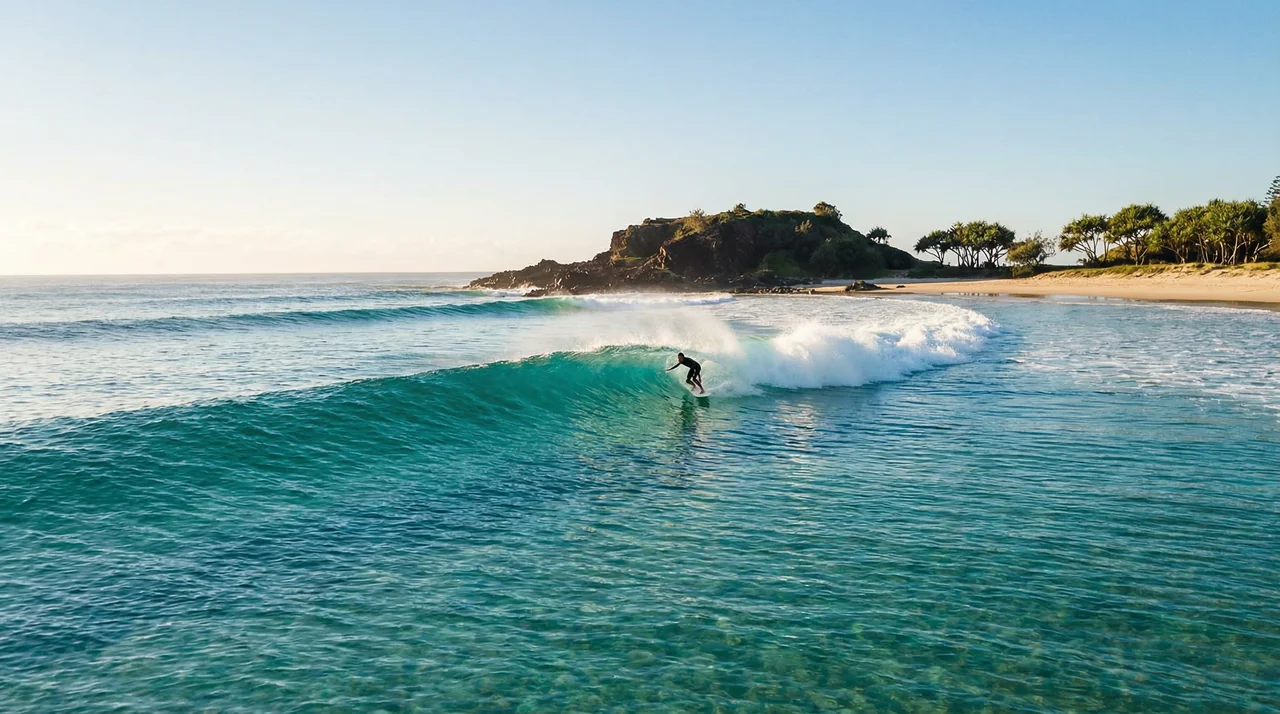
Australia is one of the most complete surf nations on earth — a country where surfing is not just a sport but a fundamental part of the national identity.
The Gold Coast
The Gold Coast in Queensland is Australia's most famous surf region. Snapper Rocks — the start of the "Superbank" — is a world-class right-hand point break that can connect through multiple sandbars for rides of over a kilometre on a good day. Kirra, at the southern end of the Superbank, is a more hollow, barreling version of the same wave and is considered by many to be the best wave on the Gold Coast when it is working properly. Burleigh Heads is a powerful, hollow right-hand point break that handles big swells and produces some of the heaviest barrels in Queensland.
Byron Bay
Byron Bay in northern New South Wales is Australia's most famous surf town. The Pass is the iconic break — a long, winding right-hand point break perfect for longboarders and intermediate surfers.
Margaret River
Margaret River in Western Australia intercepts massive Southern Ocean swells and produces some of the heaviest, most powerful waves in the country. Main Break hosts the Margaret River Pro on the WSL Championship Tour. The Box is a terrifying, shallow slab break that produces some of the heaviest barrels in Australia and is strictly for expert surfers.
Browse surf camps in Australia on WaveCamps.
How to Choose Your Destination by Level
Choosing the right destination is the most important decision you will make when planning a surf trip. Going somewhere with waves that are too powerful for your level is not just frustrating — it can be dangerous. Here is a practical breakdown.
| Skill Level | Ideal Wave Type | Top Destinations |
|---|---|---|
| Beginner | Soft, rolling beach breaks, sandy bottom, small swell | Sri Lanka (SW coast), Costa Rica (Nosara), Portugal (Baleal), Bali (Canggu), Morocco (La Source), Japan (Miyazaki) |
| Intermediate | Punchy beach breaks, mellow reef breaks, 1–2m | Sri Lanka (Arugam Bay), Bali (Uluwatu Temples), Morocco (Anchor Point), France (summer), Canaries (Famara), Nicaragua (Aposentillo), Australia (The Pass) |
| Advanced | Heavy, hollow reef breaks, fast point breaks, 2m+ | Mentawais, J-Bay (Supertubes), Hossegor (autumn), Ericeira (Coxos), Morocco (Killer Point), Mundaka, Thurso East, Gold Coast (Kirra) |
| Expert / Big Wave | Massive, powerful, consequence-heavy | Hawaii (Pipeline, Jaws), Mavericks (California), Aileens (Ireland), The Box (Margaret River), El Quemao (Lanzarote) |
Where to Stay: The Rise of the Surf Camp
For most surfers traveling to a new destination, booking a surf camp is the single best decision you can make. Surf camps remove the logistical headaches — renting cars, reading unfamiliar tides, navigating local lineups, finding the right spot on the right day. They provide local knowledge, video analysis, structured coaching, and a built-in community of like-minded travelers.
Whether you are a complete beginner or an experienced surfer looking to break through to the next level, a good surf camp will accelerate your progression faster than anything else. The best camps pair expert coaching with accommodation, meals, and guided sessions at the right breaks for your level — all included in a single price.
WaveCamps is the world's largest surf camp directory, with hundreds of options across every destination in this guide — from beginner-friendly camps in Portugal and Costa Rica to advanced performance camps in Indonesia and Morocco. Browse by destination, level, budget, and travel dates to find your perfect match.
cta Find your perfect surf camp at WaveCamps — browse by destination, level, and dates.
Frequently Asked Questions
There is no single answer — it depends entirely on your level and what you are looking for. For all-round quality, consistency, and variety across all skill levels, Indonesia (Bali) and Portugal are the two most complete surf destinations in the world. For the single best wave on the planet, most experienced surfers would point to either Jeffreys Bay in South Africa or Pipeline in Hawaii. For the most waves per square kilometre, the Mentawai Islands in Indonesia are unmatched. For cold-water adventure, Norway's Lofoten Islands are in a category of their own.
The best destinations for beginner surfers combine small, consistent, forgiving waves with a sandy bottom and a well-developed surf school scene. Sri Lanka's southwest coast, Nosara in Costa Rica, Baleal in Portugal, Canggu in Bali, Taghazout in Morocco (La Source and Hash Point), and Miyazaki in Japan are all excellent choices. The key is warm water, small waves, and access to quality coaching.
It depends entirely on the destination. Portugal and Morocco peak from September to November; France (Hossegor) peaks in September and October; Bali is best from April to October; Sri Lanka's east coast runs May to September; Hawaii's North Shore peaks November to February; Australia's Gold Coast is best March to September; Nicaragua is most consistent April to October. The Canary Islands offer year-round surf.
Surfing carries inherent risks that vary enormously by destination and wave type. Beginner-friendly beach breaks with sandy bottoms and small waves are relatively safe. The main risks increase with wave power and reef proximity — shallow reef breaks, strong rips, and heavy shore breaks demand experience and respect. Shark encounters are statistically very rare but are a consideration in South Africa and parts of Australia. Always surf within your ability level, never surf alone in remote locations, and always wear a leash.
Most people can stand up and ride small waves within their first few sessions. Becoming a competent surfer — able to read waves, position correctly, and perform basic turns — typically takes one to two years of regular surfing. A week at a quality surf camp will accelerate your progression significantly compared to surfing alone, thanks to structured coaching, video analysis, and expert guidance on wave selection.
For quality waves with minimal crowds, Nicaragua (Popoyo, Playa Colorado) and Norway (Unstad, Lofoten) stand out. The Mentawais on a liveaboard can also be remarkably uncrowded given the quality of the waves. In Europe, Ireland (outside of Bundoran) and Scotland (Thurso East) offer world-class waves with a fraction of the crowds found in Portugal or France.
It depends on the destination and season. In tropical destinations like Bali, the Maldives, Nicaragua, and Costa Rica, boardshorts are sufficient year-round. In Portugal and Morocco, a 3/2mm wetsuit covers most of the year. In the UK, Ireland, Scotland, Denmark, and Norway, a 5/4mm or 6/5mm wetsuit with boots, gloves, and hood is essential in winter. Water temperature is always the key factor — anything below 18°C will feel cold without a wetsuit.