Surfing in Morocco: The Complete Guide
This guide covers everything you need to know about surfing in Morocco — the waves, the regions, the seasons, the culture, and the logistics. It is a surf guide, not a camp guide. If you are looking for surf camps in Morocco, head to our surf camps in Morocco page where you can browse and compare all listed camps.
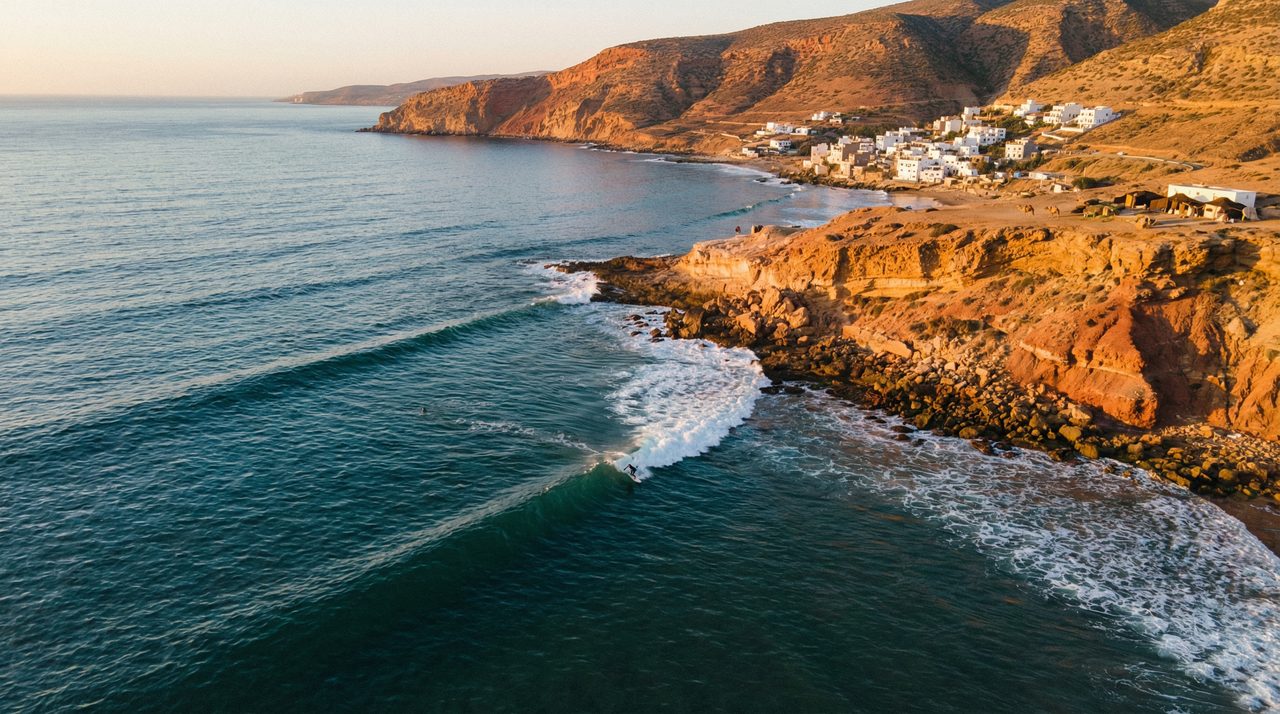
Morocco is one of the world's great surf destinations. Its Atlantic-facing coastline stretches over 1,200 kilometres from Tangier in the north to Lagouira on the Mauritanian border, and it catches swell from every direction the North Atlantic can throw at it. The country has everything: long, perfectly shaped point breaks that peel for hundreds of metres, powerful beach breaks, remote reef setups, and a surf culture that has been quietly building since the 1960s. Add year-round warmth, extraordinary food, and a landscape unlike anywhere else in the world, and it is not hard to understand why Morocco has become Africa's surf capital.
The Surf Regions
Taghazout and Tamraght
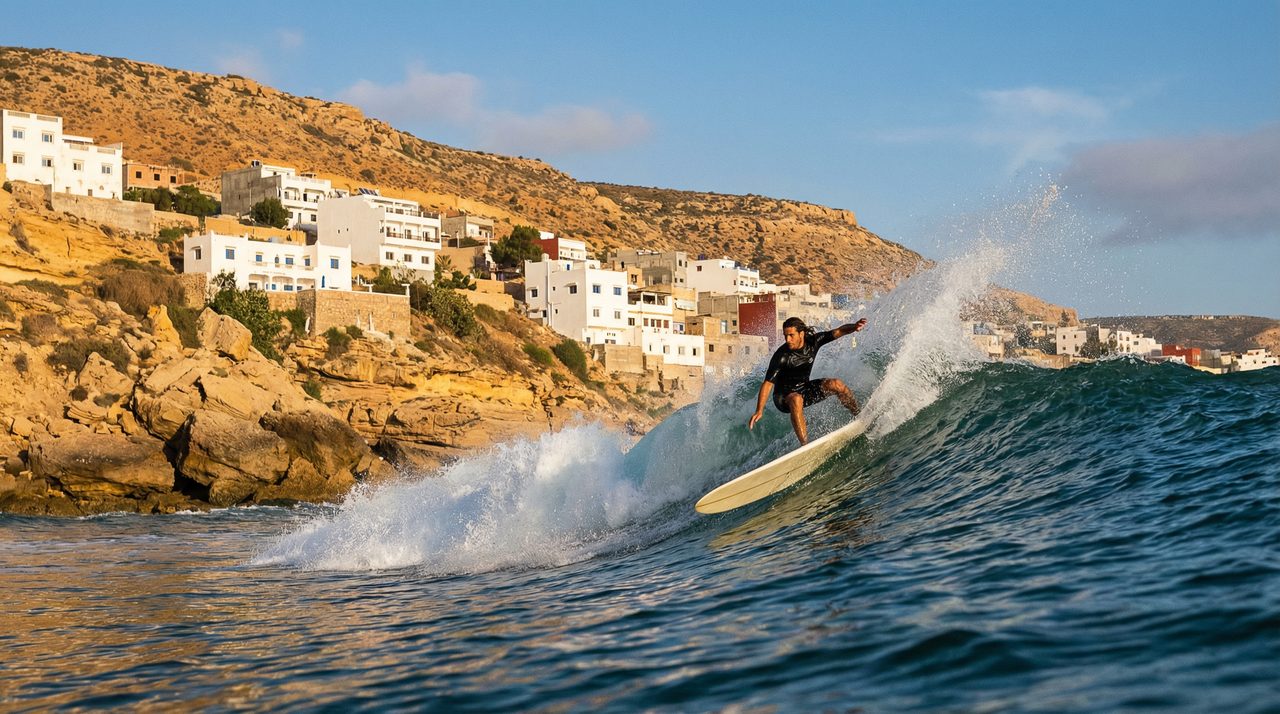
Taghazout is the centre of gravity for Moroccan surf. This small fishing village 20 kilometres north of Agadir has transformed over the past two decades into one of the most concentrated surf destinations in the world, with a string of world-class point breaks within walking distance of each other.
The key breaks around Taghazout include Anchor Point — a long, powerful right-hand point that works best on a solid north-west swell and is considered one of the best point breaks in Africa. Killers is a shorter, punchier right that breaks closer to shore and handles bigger swells. Hash Point is the most accessible of the three, a long right-hander that works on smaller swells and is ideal for intermediates. Panoramas is a mellow, long right further up the coast, excellent for beginners and longboarders.
Tamraght, the village immediately south of Taghazout, has its own beach break — Tamraght Beach — which is the main learning spot for the area and where most beginner surf lessons take place. The wave is forgiving and consistent, with a sandy bottom and minimal hazards.
Who it suits: All levels. Beginners learn at Tamraght Beach; intermediates progress on Hash Point and Panoramas; advanced surfers target Anchor Point and Killers on the right swell.
Imsouane
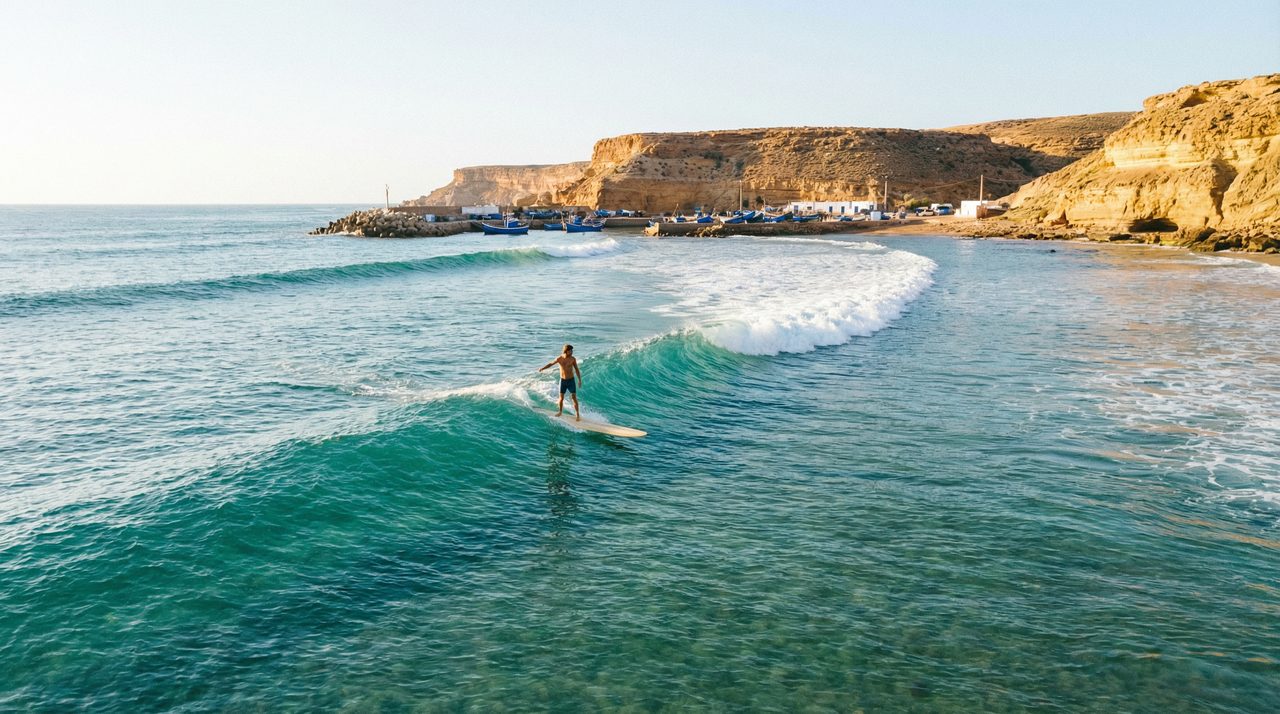
Imsouane is a small fishing village about 70 kilometres north of Agadir, and it is home to what is often described as the longest rideable wave in Africa. The Imsouane Bay wave is a long, slow, mellow right-hander that peels for up to 700 metres on a good day — a longboarder's paradise and a magical experience for any surfer who wants to practise their footwork and flow without the pressure of a fast, critical wave.
There is also a more powerful break called The Cathedral, a right-hand point that breaks on the outside of the bay and handles bigger swells with more punch.
Imsouane has a remote, end-of-the-road feel that Taghazout has largely lost. The village is small, the facilities are basic, and the pace of life is slow. It is exactly what many surfers are looking for.
Who it suits: Beginners and intermediates at the bay; intermediate to advanced at The Cathedral. Longboarders will love it at any level.
Agadir
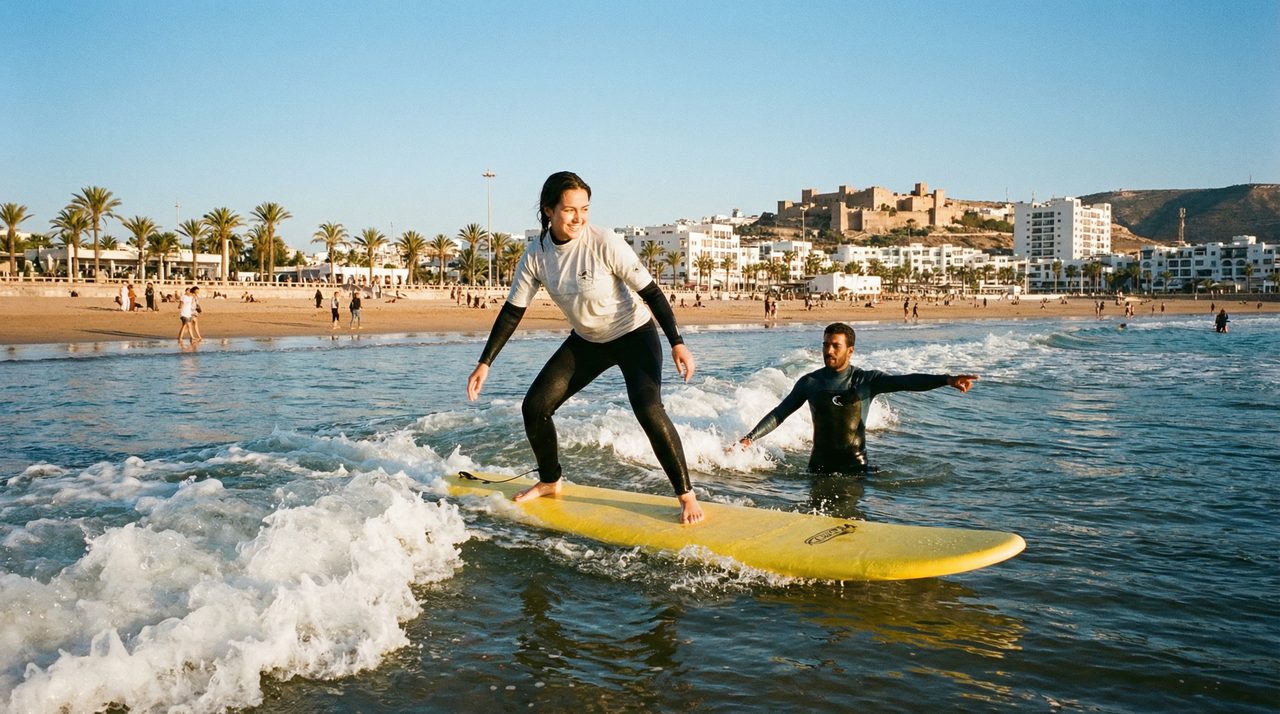
Agadir itself is a modern beach city rebuilt after the 1960 earthquake, and its surf is primarily a beach break — Agadir Beach — that works best on a south-west swell. It is not the most exciting wave in Morocco, but it is consistent, accessible, and well-suited to beginners and improvers who want to be based in a city with full amenities.
The beach is long and sandy, the water is warm relative to the rest of the Moroccan coast, and the infrastructure (restaurants, transport, accommodation) is excellent. Most surfers use Agadir as an arrival hub rather than a surf base, but it is a perfectly valid option for those who want a more urban experience.
Who it suits: Beginners and casual surfers. Better as a base for day trips to Taghazout than as a surf destination in its own right.
Sidi Kaouki
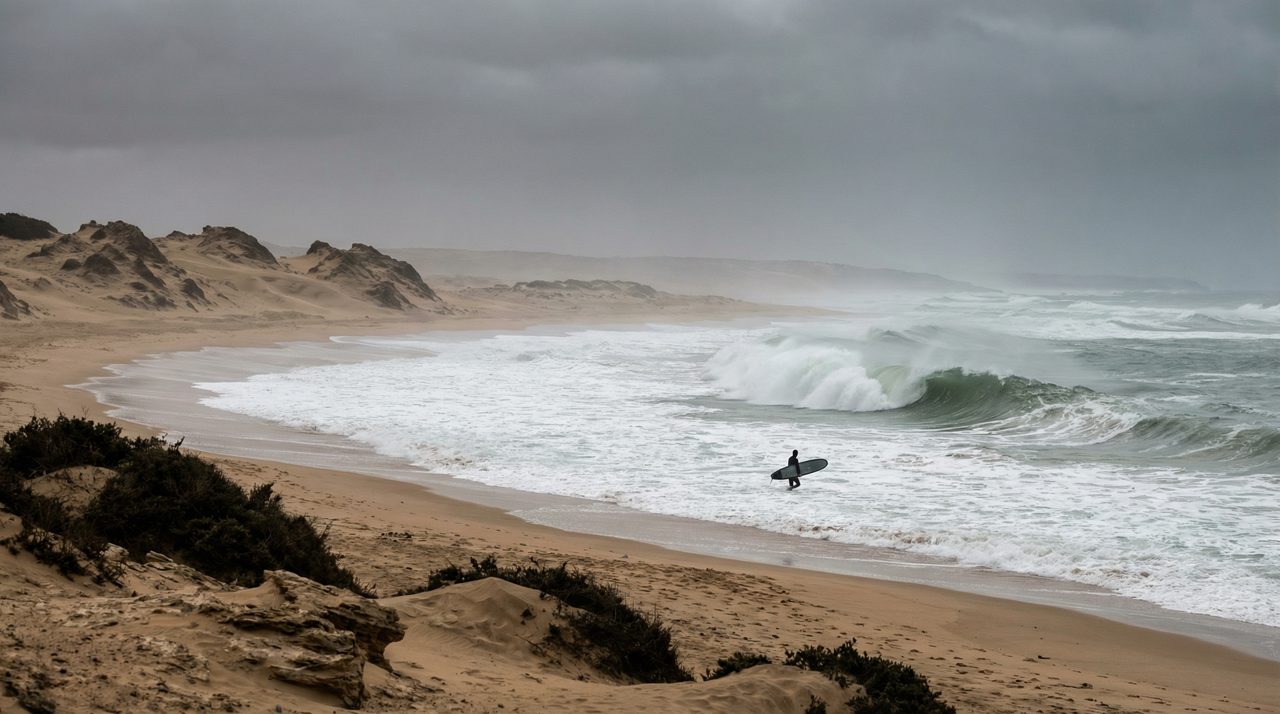
Sidi Kaouki is a wild, windswept beach about 25 kilometres south of Essaouira, and it is one of the most underrated surf spots in Morocco. The beach is long, exposed, and powerful — it picks up swell from a wide arc and is almost always offshore in the strong trade winds that blow down this stretch of coast.
The wave is a beach break with some point break sections, and it handles a wide range of swell sizes. On smaller days it is accessible to intermediates; on bigger swells it becomes a serious wave that demands respect. The wind makes it a favourite with kitesurfers and windsurfers as well, giving the beach a lively, multi-sport atmosphere.
Who it suits: Intermediate to advanced surfers. The wind and exposed conditions make it less suitable for beginners.
Essaouira
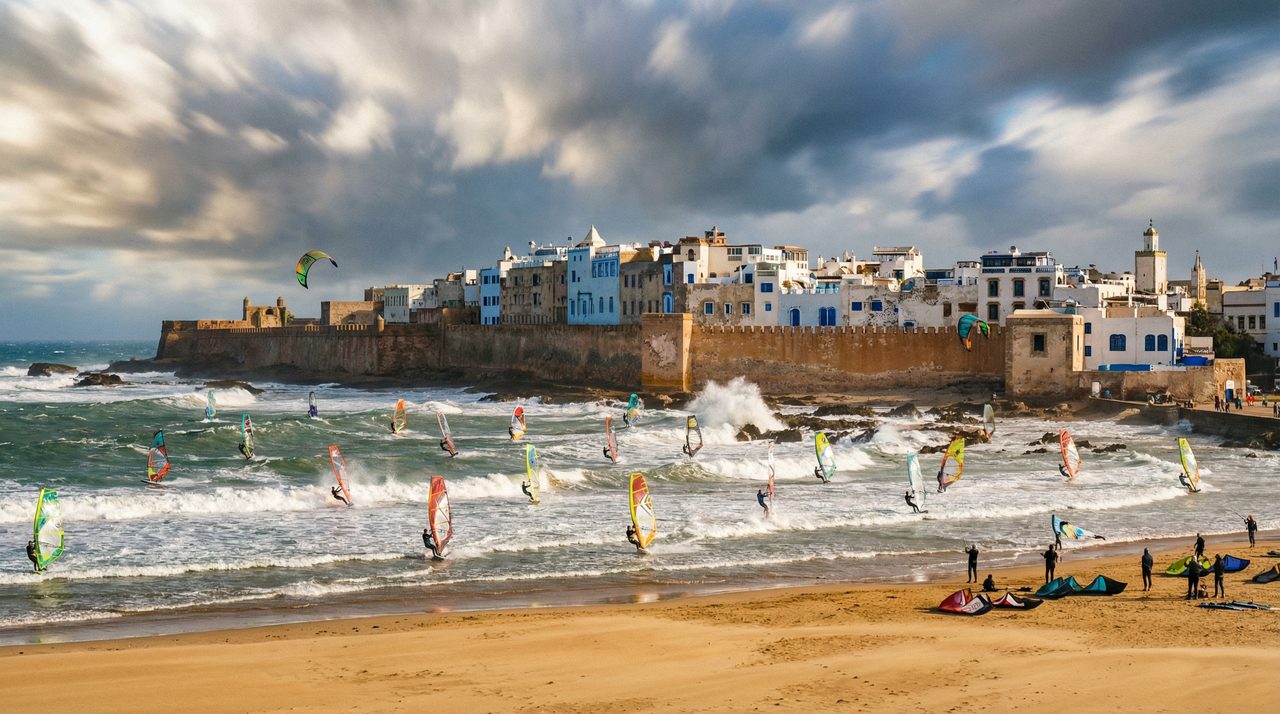
Essaouira is one of Morocco's most beautiful cities — a UNESCO-listed medina, blue-and-white walls, and a constant Atlantic wind that has made it the windsurf and kite capital of Africa. The surf here is secondary to the wind sports, but there are waves: Essaouira Beach picks up swell and can produce decent beach break conditions, particularly in autumn and winter when the wind drops.
The city itself is worth visiting for its culture, food, and architecture regardless of the surf. The medina, the fish market, and the ramparts are all extraordinary.
Who it suits: Intermediate surfers who also want a cultural experience. Not a dedicated surf destination.
Mirleft and Sidi Ifni
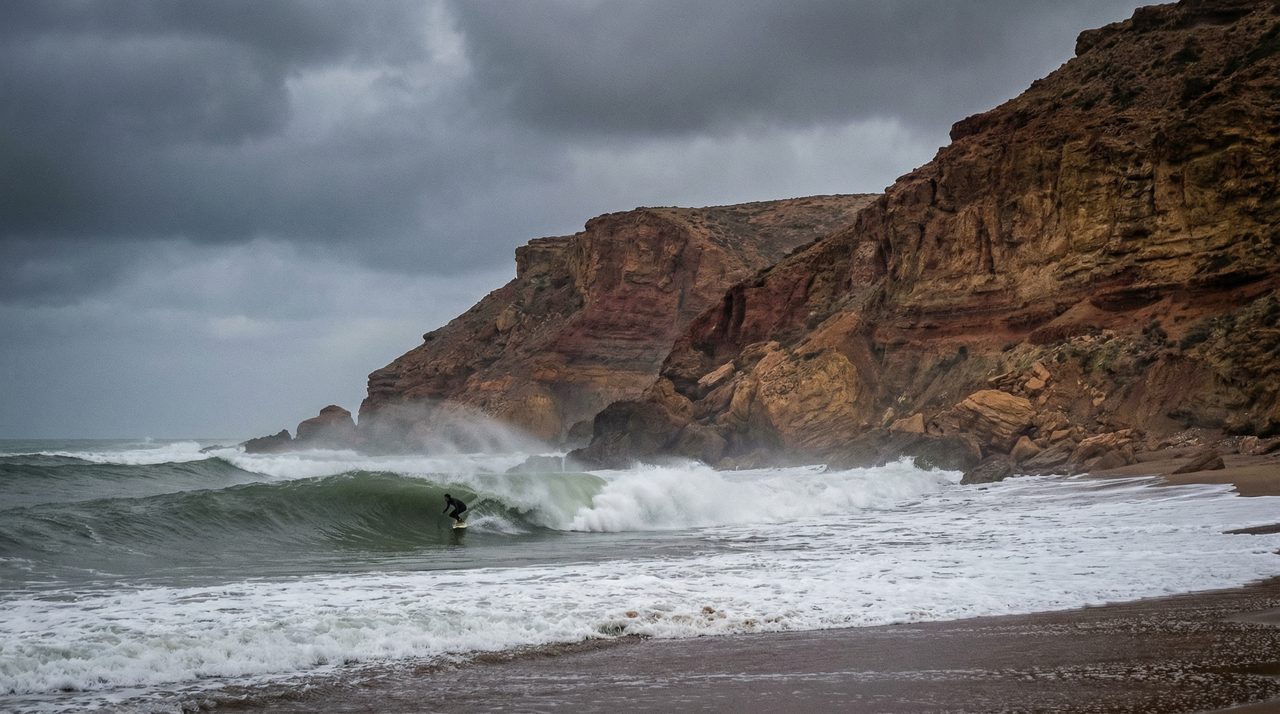
South of Agadir, the coast becomes progressively wilder and less visited. Mirleft and Sidi Ifni are small towns with dramatic cliffs, empty beaches, and powerful waves that see very few surfers. The infrastructure is minimal and the waves are serious — reef breaks and exposed beach breaks that work best on a solid swell.
This is Morocco for the adventurous surfer who wants empty lineups and a genuine off-the-beaten-track experience. It is not a camp destination — there are few organised surf operations here — but it is a remarkable place to explore independently.
Who it suits: Experienced, independent surfers comfortable with remote conditions.
Best Surf Spots: Quick Reference
| Spot | Location | Type | Level | Best Season |
|---|---|---|---|---|
| Anchor Point | Taghazout | Right-hand point | Intermediate–Advanced | Oct–Mar |
| Killers | Taghazout | Right-hand point | Advanced | Oct–Mar |
| Hash Point | Taghazout | Right-hand point | Intermediate | Sep–Apr |
| Panoramas | Taghazout | Right-hand point | Beginner–Intermediate | Sep–Apr |
| Tamraght Beach | Tamraght | Beach break | Beginner | Year-round |
| Imsouane Bay | Imsouane | Long right point | All levels | Oct–Apr |
| The Cathedral | Imsouane | Right-hand point | Intermediate–Advanced | Oct–Mar |
| Agadir Beach | Agadir | Beach break | Beginner | Year-round |
| Sidi Kaouki | Sidi Kaouki | Beach/point | Intermediate–Advanced | Oct–Apr |
| Essaouira Beach | Essaouira | Beach break | Intermediate | Oct–Mar |
When to Go: Season by Season
Morocco is a year-round surf destination, but the quality and character of the surf changes significantly across the seasons.
| Season | Months | Swell | Water Temp | Crowds | Best For |
|---|---|---|---|---|---|
| Autumn | Sep–Nov | Building, consistent | 20–22°C | Moderate | All levels, best overall conditions |
| Winter | Dec–Feb | Most powerful, frequent | 17–19°C | Low | Intermediate–Advanced |
| Spring | Mar–May | Easing, clean | 18–20°C | Low–Moderate | Beginners, intermediates |
| Summer | Jun–Aug | Small, inconsistent | 21–23°C | High | Beginners only |
The sweet spot: October to April is when Morocco is at its best for most surfers. October and November offer the best combination of swell consistency, warm weather, and manageable crowds. January and February bring the biggest swells and the most powerful conditions — excellent for experienced surfers, challenging for beginners.
Wetsuit Guide
Morocco's Atlantic water is cooler than most people expect, particularly in winter. Here's what to wear by month:
| Month | Water Temp | Recommended Wetsuit |
|---|---|---|
| Jan–Feb | 17–18°C | 4/3mm full suit |
| Mar–Apr | 18–19°C | 3/2mm full suit |
| May–Jun | 19–21°C | 3/2mm or shorty |
| Jul–Aug | 21–23°C | Shorty or boardshorts |
| Sep–Oct | 21–22°C | 3/2mm or shorty |
| Nov–Dec | 18–20°C | 3/2mm full suit |
Most camps include wetsuit hire — check before you book if you have specific preferences.
Skill Level Guide
Complete beginners: Start at Tamraght Beach (Taghazout area) or Agadir Beach. Both are sandy-bottomed beach breaks with consistent, manageable waves and a well-established lesson infrastructure. Imsouane Bay is also excellent for beginners who want a longer, more forgiving wave.
Improvers (can ride but still developing): Hash Point and Panoramas around Taghazout are ideal — long, forgiving right-handers that give you time to practise your turns and positioning. Imsouane Bay is also excellent at this level.
Intermediate surfers: Anchor Point on a medium swell, Hash Point on a bigger day, The Cathedral at Imsouane, and Sidi Kaouki on a clean day. Morocco rewards intermediates enormously — the point breaks give you the time and space to develop your surfing in a way that beach breaks simply cannot.
Advanced surfers: Anchor Point and Killers on a solid north-west swell are world-class waves. Mirleft and Sidi Ifni for the adventurous. Morocco's point breaks at full power are serious, fast, and demanding — exactly what advanced surfers come for.
Getting There and Getting Around
Airports: The main gateway is Agadir Al Massira Airport (AGA), which has direct flights from most major European cities including London, Paris, Amsterdam, and Madrid. Marrakech Menara Airport (RAK) is also an option — it's about 2.5 hours from Taghazout by road and has more flight connections, but the transfer is longer.
Getting to Taghazout from Agadir: Taghazout is 20 km north of Agadir — about 30 minutes by taxi (€10–15) or grand taxi (shared taxi, €2–3). Most camps offer airport transfers from AGA; confirm when booking.
Getting around the coast: A hire car gives you the most flexibility to explore spots beyond Taghazout. The coast road north to Imsouane (70 km) and south to Sidi Kaouki and Essaouira is well-surfaced and scenic. Grand taxis run between most towns and are cheap. Buses connect the main cities.
Surf Culture and Etiquette
Morocco's surf culture is warm and welcoming to visitors, but the main breaks around Taghazout can get crowded — particularly Anchor Point and Hash Point in peak season. The usual rules apply: wait your turn, don't snake, communicate in the lineup, and respect the locals who surf these waves every day.
Moroccan surfers are skilled and take their waves seriously. Showing respect in the lineup — letting locals have priority, being patient, and not dropping in — will be noticed and appreciated.
Away from the surf, Morocco is a conservative Muslim country. Dress modestly away from the beach, be respectful of local customs, and learn a few words of Darija (Moroccan Arabic) or French — even a simple greeting goes a long way.
Cost of a Surf Trip to Morocco
Morocco is one of the most affordable surf destinations in the world. Here's a realistic budget breakdown:
| Category | Budget | Mid-Range | Premium |
|---|---|---|---|
| Accommodation (per night) | €15–25 (hostel/dorm) | €40–70 (surf house, shared room) | €80–150 (private room, pool) |
| Surf lessons (per day) | €25–35 | €35–50 | €50–80 (private coaching) |
| Food (per day) | €10–15 (local tagine spots) | €20–35 (mix of local and camp food) | €40–60 (camp full board) |
| Transport (airport transfer) | €3–5 (grand taxi) | €10–15 (private taxi) | Included in camp price |
| Weekly total (approx.) | €350–500 | €600–900 | €900–1,400 |
Most surf camps offer all-inclusive packages that bundle accommodation, lessons, board hire, and meals — these typically represent better value than booking everything separately.
Frequently Asked Questions
For accessibility, consistency, and variety, yes — Morocco is the most developed surf destination on the African continent. South Africa (Jeffrey's Bay, Cape Town) is a rival for quality, but Morocco wins on ease of access from Europe and the sheer concentration of camps and infrastructure.
Taghazout's main breaks — Anchor Point and Hash Point — can get busy in peak season (October–March), particularly on good swell days. Imsouane, Sidi Kaouki, and spots further south are significantly less crowded. If you want empty lineups, go in summer or head south.
Shark attacks are extremely rare on Morocco's Atlantic coast. The water is cold enough to deter most tropical species, and there are no recorded attacks at the main surf spots. It is not a concern for the vast majority of surfers.
Not essential, but helpful. English is widely spoken in the surf camps and tourist areas of Taghazout. French is more useful in Agadir and Essaouira. A few words of Darija (Moroccan Arabic) — hello (salam), thank you (shukran), please (afak) — will be warmly received.
October is the single best month for most surfers — consistent swell, warm weather, warm water, and manageable crowds. November and March are close seconds. If you are a beginner, April and May offer smaller, cleaner surf with excellent weather.
Ready to Book?
Browse and compare all surf camps in Morocco on our surf camps in Morocco page →