The United Kingdom offers some of Europe's best and most accessible surf, with Cornwall and Devon in England and the coastlines of Wales and Scotland providing quality waves throughout the year. The UK surf scene is well-established, with a strong community and excellent infrastructure for surfers of all levels.
What makes the UK special is the combination of quality waves, dramatic coastlines, and a thriving surf culture. The water may be cold, but the waves are consistent and the community is welcoming.
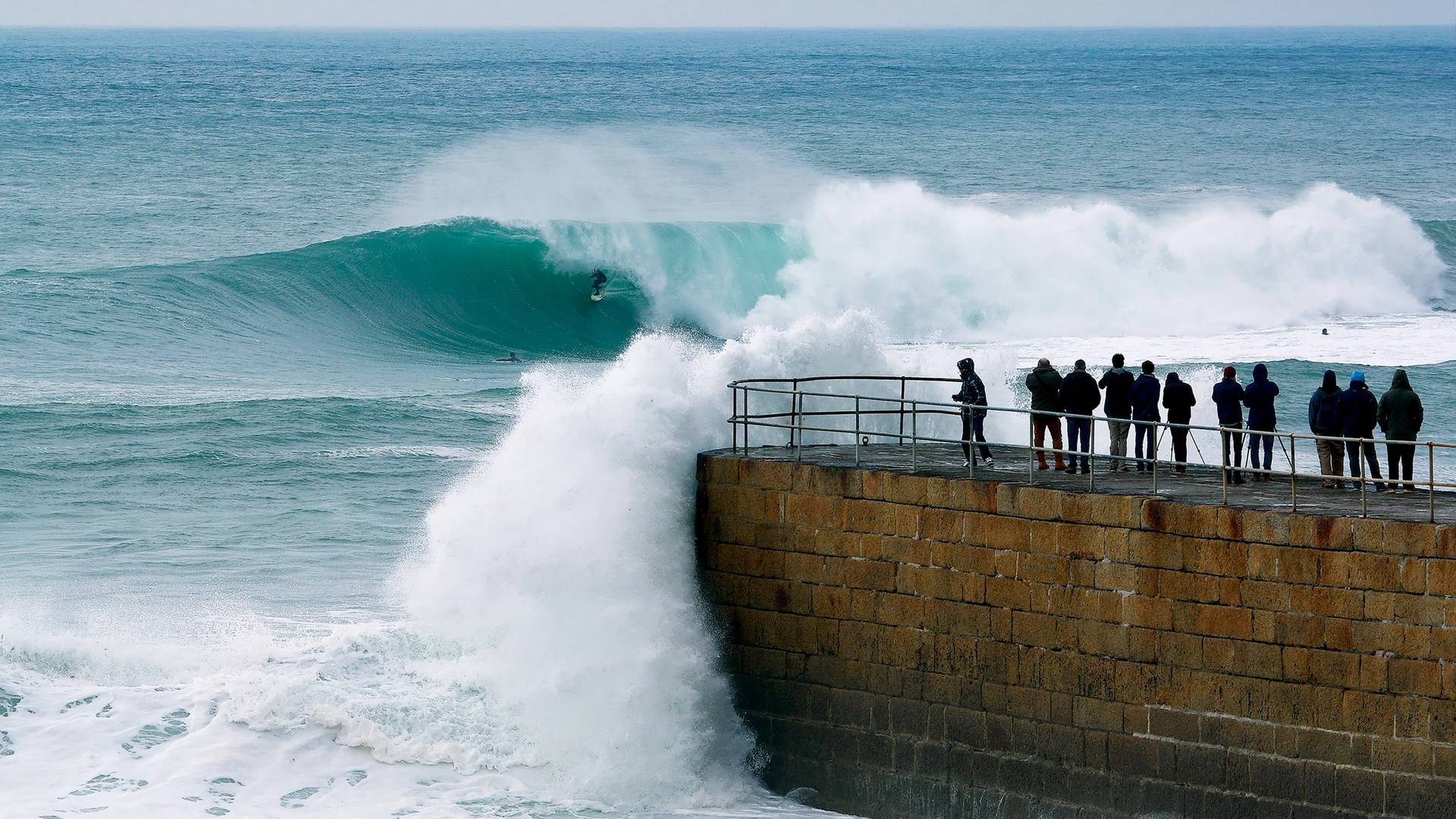
Cornwall produces quality waves when Atlantic swells arrive.
England's southwest coast, particularly Cornwall and Devon, is the heart of British surfing. The region receives consistent Atlantic swells and offers a variety of breaks, from the famous beach breaks of Fistral and Watergate Bay to the reef breaks of the South Coast.
Cornwall is home to the UK's largest surf community, with numerous surf schools, shops, and a thriving surf culture. The area offers waves for all levels, from gentle beginner beaches to challenging reef breaks.
Wales offers excellent surf, particularly on the Gower Peninsula and Pembrokeshire coast. The region receives the same Atlantic swells as Cornwall but with fewer crowds. Llangennith on the Gower is one of the UK's best beach breaks.
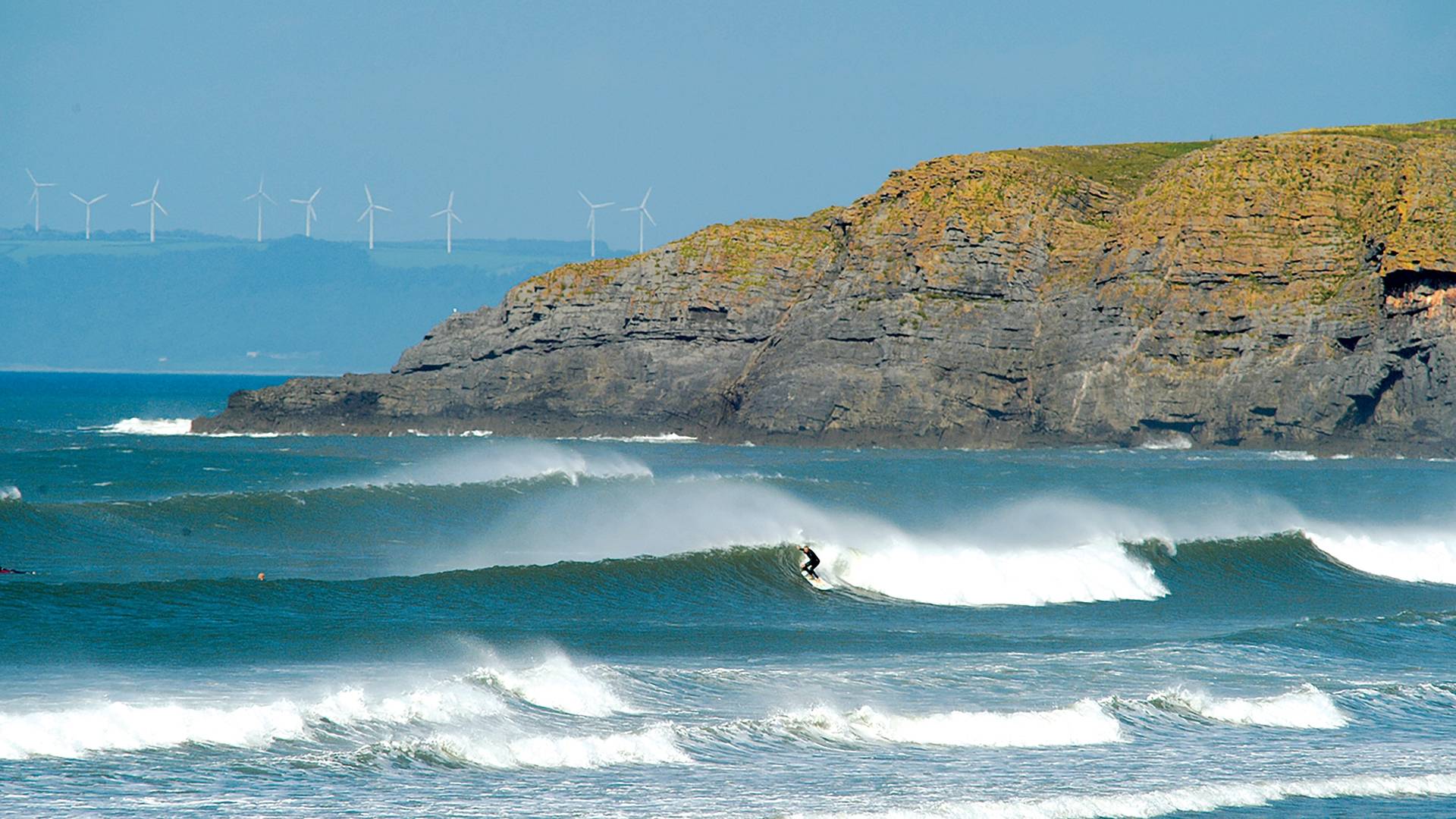
Wales offers quality surf with fewer crowds than Cornwall.
The Most Famous Surf Spots in United Kingdom
Fistral Beach
Cornwall's most famous wave, Fistral is a consistent beach break that hosts professional competitions. The beach offers multiple peaks and works on a variety of swell directions.
Watergate Bay
A beautiful beach break north of Newquay, Watergate offers consistent waves and stunning scenery.
Llangennith
Wales' premier surf beach, Llangennith on the Gower Peninsula offers quality beach breaks and a beautiful setting.
Thurso East
Scotland's most famous wave, Thurso East is a world-class reef break that produces powerful, hollow waves. The cold water and remote location mean it's for dedicated surfers only.
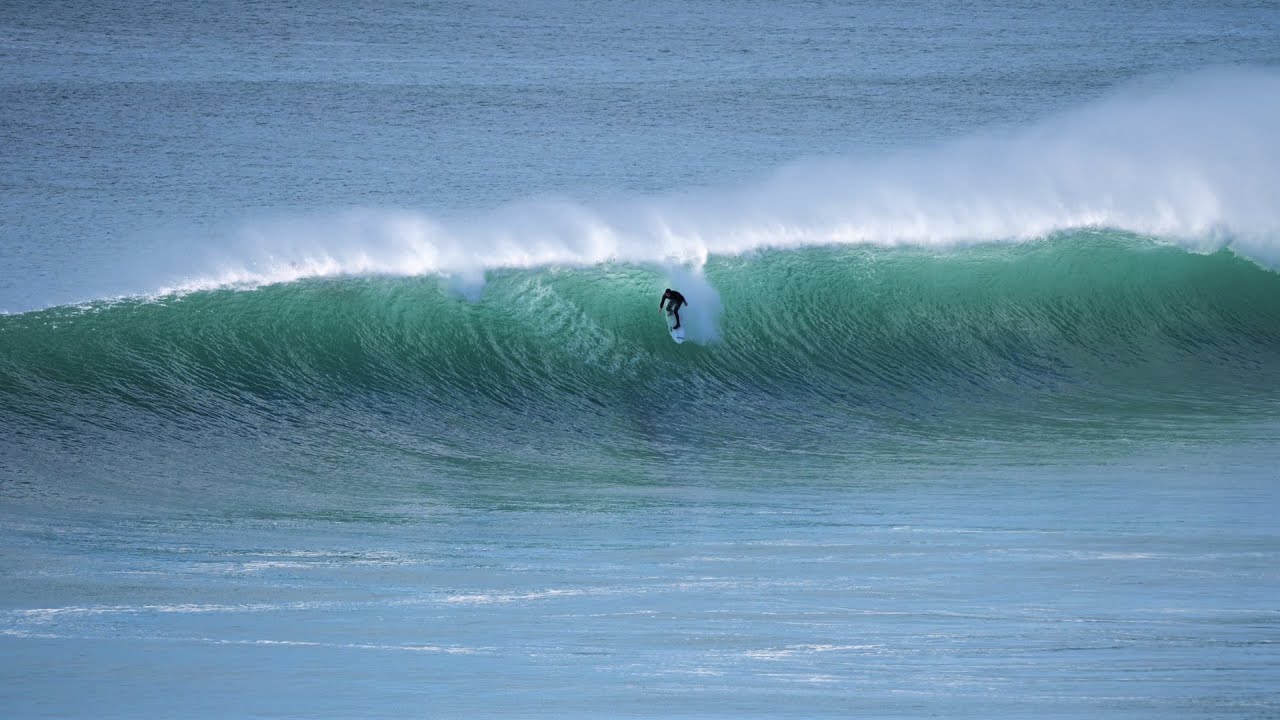
The UK can produce quality barrels when conditions align.
Surf Scene in United Kingdom
The UK has one of Europe's most established surf scenes, with a history dating back to the 1960s. The country has produced talented surfers and has a thriving industry centered around Cornwall.
Cold water surfing is part of the UK experience, with thick wetsuits required year-round. But the quality of waves and the passion of the community make it worthwhile.
Autumn (September to November) is often considered the best time to surf in the UK. During this period, the Atlantic Ocean becomes more active, delivering consistent swells and bigger waves. The water is still relatively warm from the summer months, and the summer crowds have dispersed. Spring (April to May) is also a great time for surfing, with improving weather and good wave conditions.
The UK offers a wide variety of surf spots suitable for all skill levels. For beginners, there are many beaches with gentle, rolling waves, such as Saunton Sands in Devon and Newgale Beach in Wales. Intermediate and advanced surfers can find more challenging waves at spots like Fistral Beach in Newquay and Thurso East in Scotland, especially during the autumn and winter months.
Water temperatures in the UK vary significantly throughout the year and by location. In the summer (June to August), temperatures can reach 15-20°C (59-68°F), while in the winter (December to February), they can drop to 6-10°C (43-50°F). A good quality wetsuit is essential for surfing in the UK, with a 3/2mm for summer and a 5/4mm or even 6mm for winter.
Besides your surfboard, you'll definitely need a good wetsuit appropriate for the season. We recommend a 5/4mm wetsuit for most of the year, along with boots, gloves, and a hood for the colder months. Other essentials include a towel, warm clothing for after your surf, and sunscreen, as you can still get sunburnt on cloudy days. You might also want to check out some of the local surf schools for lessons or equipment rental.
The UK has a diverse culinary scene. Near the coast, you'll find classic British dishes like fish and chips, as well as a growing number of cafes and restaurants offering locally sourced and international cuisine. The surf culture in the UK is friendly and welcoming, with a strong sense of community, especially in popular surf towns like Newquay in Cornwall and Scarborough in Yorkshire.
The cost of a surf trip in the UK can vary widely. A recent report suggested the average surfer spends over £2,000 per year on surfing. Budget-friendly options include staying at campsites or hostels and self-catering. A week-long surf camp can range from £300 to £800, depending on the accommodation and level of coaching. You can find a variety of options on our United Kingdom surf camps page.
Surfing in the UK is generally safe, but it's important to be aware of the risks. Always check the weather forecast and tide times before you go out. Be mindful of rips and currents, and it's always best to surf with a buddy. If you're a beginner, we strongly recommend taking a lesson from a certified instructor at one of the many surf schools.
Many of the UK's best surf spots are located in areas of outstanding natural beauty. In Cornwall, you can explore the picturesque coastline, visit the Eden Project, or discover the historic St Michael's Mount. In Wales, the Pembrokeshire Coast National Park offers stunning coastal walks and wildlife watching opportunities. And in Scotland, you can combine your surf trip with a visit to the dramatic landscapes of the Highlands.